
Noida Master Plan 2041: What Actually Changes, and Where Buyers Should Watch Closely
A grounded look at Noida Master Plan 2041, likely growth corridors, and what first-time buyers should verify before acting on it.
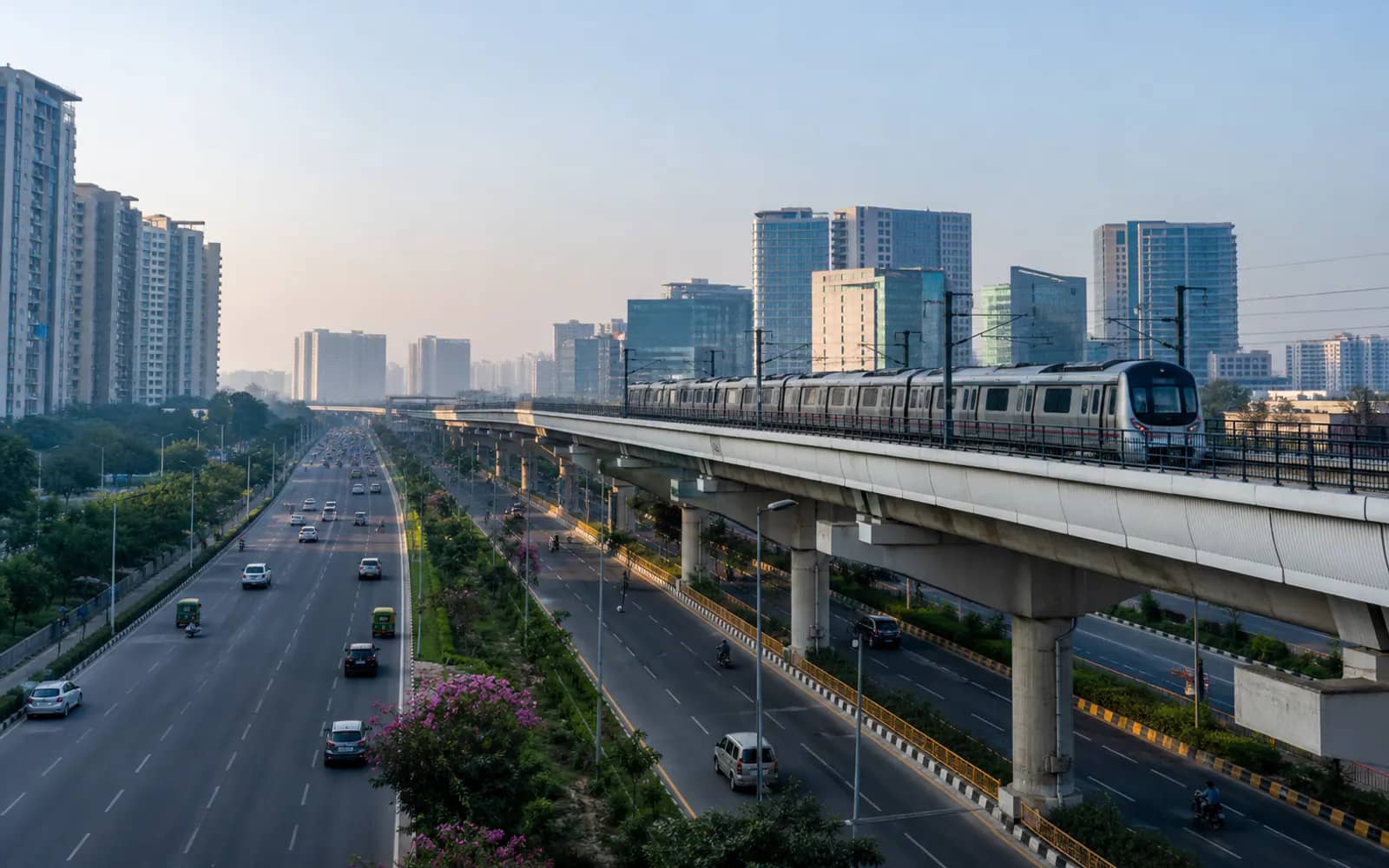
Answer: Noida Master Plan 2041 is expected to widen the city's footprint through more mixed-use land, stronger transport corridors, and new industrial/logistics zones, but the exact sector-wise land-use changes are not yet publicly notified in full detail. The safest approach is to track Noida Authority's official notified map, cross-check any project against UP RERA, and treat brochure claims about the plan as directional, not confirmed, until verified.
Evidence-led guide: we do not quote live prices, approvals or returns as our own claims. Verify project-specific facts on the official sources linked below before acting.
What is Noida Master Plan 2041 actually proposing?
Noida Master Plan 2041 is the city's long-horizon land-use and infrastructure blueprint, meant to guide how much land goes to housing, commercial activity, industry and logistics, and green or institutional use as the city expands. Directionally, it is expected to support higher-density mixed-use development, stronger transport corridors, and new industrial and logistics growth zones as Noida grows outward from its already-built core.
What it does not do, at least not yet in any publicly verifiable form, is guarantee price appreciation in any specific sector. The plan's real estate impact depends entirely on three variables: which sectors get land-use upgrades, how fast roads, metro links and utilities actually get built, and how close a given plot or project sits to that new infrastructure once it is delivered. None of this is uniform across the city, and treating a citywide plan as a blanket reason to buy in any one location is a mistake buyers repeatedly make.
Because the full notified 2041 map and sector-by-sector schedule are not part of the current public research record used for this article, any claim that names an exact sector allocation, FSI change, or land parcel conversion should be treated as unverified until you confirm it directly with Noida Authority.
Which parts of Noida are positioned to benefit most?
Master plans tend to reprice fastest where new connectivity and land-use conversion overlap, not uniformly across an entire city. Older, fully built sectors with no fresh infrastructure pipeline typically see slower re-rating even under a favourable master plan, while corridors that combine existing metro or expressway access with room for further densification tend to move first.
Within Noida's already-established growth corridor, Sector 72 stands out because it already has working connectivity: proximity to Sector 51 metro station, direct access to the Noida-Greater Noida Expressway, and a dense surrounding mix of residential and commercial catchments. Corridors like this, where infrastructure is already functioning rather than promised, are generally lower-risk than areas still waiting on plan execution.
The wider Noida Expressway belt, covering Sectors 94 through 98 and marketed under names like the Billionaires' Corridor or Sector 94-98 luxury belt, is also positioned to gain from any master-plan-driven densification because it already sits on a functioning expressway spine linking toward Greater Noida, Jewar airport region, and the broader NCR logistics and residential belt. This is an inference based on existing connectivity, not a confirmed 2041 land allocation, and should be verified against the notified plan when it is published.
Will Noida property prices rise because of Master Plan 2041?
This is the single most common question buyers ask, and the honest answer is that no one can state a specific price outcome as fact today. Price effects from master plans unfold over years, are uneven across sectors, and depend on execution pace as much as on the plan itself. Any number quoted as a guaranteed appreciation percentage tied to the 2041 plan should be treated as marketing language, not a verified market statistic.
What can be said with more confidence is a pattern: sectors with functioning metro access, expressway frontage, and established commercial catchments tend to hold and improve value faster than sectors that are purely land-banked on future promises. That is a general real estate principle applicable across NCR, not a Noida-specific guarantee.
Buyers should check current circle rates on IGRSUP before assuming any appreciation story, and should treat any developer's projected price growth as a claim to verify, not a fact to accept.
Should a first-time buyer invest in Noida before the plan is fully implemented?
For end-use buyers, buying before full 2041 execution can make sense, but only if three conditions are already met independently of the master plan: the project is UP RERA registered, the developer has a documented delivery record, and your monthly outgo is comfortable without depending on future appreciation. The master plan should be a bonus consideration, not the primary reason to buy.
For investment-focused buyers, the safer play is generally to prefer completed or near-completion inventory in corridors with visible, already-functioning demand and verified transport access, rather than paying a premium for land purely on the promise of a future plan. Master plans commonly take far longer to translate into realized price growth than brochures suggest.
The biggest risk for a first-time buyer is paying today for potential that may take a decade or more to materialize. Before signing anything, verify UP RERA registration, sanctioned building plans, the stated possession timeline, and run a title and encumbrance check via IGRSUP. Buying after some infrastructure is already under construction, rather than purely on future master-plan promise, is generally a lower-risk approach.
What new infrastructure is coming, and which neighbourhoods benefit most?
Noida's broader corridor is seeing ongoing and planned connectivity work, including stronger access via the Noida-Greater Noida Expressway, DND, the NH-24/Delhi-Meerut corridor, and metro-linked areas around Sector 51. Projects such as the Faridabad-Noida-Ghaziabad Expressway are frequently cited in developer marketing as a future connector, but its current construction status should be verified directly with Noida Authority before being treated as priced-in fact.
As a general pattern, the sectors that gain most from new infrastructure are those near metro interchanges, expressway access points, established employment hubs, and airport-linked growth corridors. On the currently available evidence, Sector 72 is already positioned as a connectivity-led node given its metro and expressway proximity, while the Sector 94-98 Billionaires' Corridor belt is positioned to gain from wider expressway-linked growth and proximity to the Jewar airport region as that connectivity matures.
None of this constitutes a confirmed government timeline. Readers should track NMRC for metro corridor operations and extensions, and Noida Authority for road network approvals, rather than relying on project brochures alone.
How does this play out for retail and mixed-use commercial buyers?
Retail and mixed-use commercial buyers face a slightly different calculation than residential end-users. For retail-linked or studio-format commercial assets, catchment density and existing footfall matter more than long-term master-plan promises, because rental income depends on today's population and connectivity, not on 2041 projections.
Sector 72 already carries this kind of established catchment, sitting near Sector 51 metro station with surrounding residential and commercial density built up over years. Projects in this corridor with mixed-use retail and commercial studio-format units are positioned on this existing connectivity story. Buyers considering such assets should independently verify UP RERA registration numbers, promoter disclosed timelines, and any connectivity or footfall claim made in marketing material, rather than accepting brochure figures at face value.
Readers can review project specifics on the M3M India Noida official website, but the underlying due diligence process, RERA check, title check, and possession-date verification, remains the same regardless of which developer or project is being considered.
How should buyers verify master-plan claims before acting on them?
Because master plans are long-horizon documents subject to revision, phased execution, and political and administrative delay, the only reliable approach is direct verification against primary sources rather than developer summaries. Four checks matter most.
First, confirm the actual notified Master Plan 2041 land-use map and sector schedule with Noida Authority rather than relying on a project brochure's interpretation of it. Second, confirm any specific project's registration, promoter details, and possession date on UP RERA. Third, run a title and encumbrance check via IGRSUP before any token payment. Fourth, for metro-linked claims, confirm current operational status and any extension plans directly with NMRC.
Buyers who skip these four checks and rely purely on a master-plan narrative are the ones most likely to overpay for potential that takes years longer than expected to show up as real value.
How to verify this yourself
- Confirm the final notified Noida Master Plan 2041 land-use map and sector schedule directly with Noida Authority before treating any sector-specific claim as fact
- Check any project's registration number, promoter details, and possession date on UP RERA (up-rera.in)
- Verify current circle rates and run a title or encumbrance check via IGRSUP (igrsup.gov.in) before any token payment
- Confirm metro corridor status, station operations, and extension plans directly with NMRC rather than relying on project marketing
- Verify leasehold tenure terms and any pending Transfer Memorandum charges with Noida Authority before purchase
Sources and where to verify
Continue your Noida research
Frequently Asked Questions
Is buying in Noida before Master Plan 2041 kicks in a loss or profit move?+
It depends entirely on what you buy, not on the master plan itself. If the project is UP RERA registered, has a credible developer with a documented delivery record, and sits in a corridor with already-functioning connectivity such as Sector 72 or the Sector 94-98 Expressway belt, buying now for end-use can be reasonable. If you are buying purely on the promise of future master-plan upside in an unregistered or undocumented project, you are taking on speculative risk that could easily turn into a multi-year loss of opportunity cost.
Which Noida sectors will develop the most under the 2041 plan?+
Corridors that already combine functioning metro or expressway access with room for further density are the likeliest to develop fastest, which on current evidence points toward Sector 72 given its Sector 51 metro and expressway proximity, and the wider Sector 94-98 Billionaires' Corridor belt given its expressway spine and Jewar airport region proximity. The final sector-by-sector allocation should still be confirmed against Noida Authority's notified map once published.
Will Noida property prices definitely rise because of the 2041 master plan?+
No specific price rise can be stated as fact today, since it depends on execution pace, sector-wise land-use changes, and proximity to delivered infrastructure. Buyers should check current circle rates on IGRSUP and treat any developer-quoted appreciation percentage as a claim to verify, not a guaranteed outcome.
What should a first-time home buyer check before investing based on the master plan?+
Verify the project's UP RERA registration and promoter details, confirm the possession timeline in writing, run a title and encumbrance check via IGRSUP, and separately confirm any infrastructure claim, such as metro extension or expressway completion, directly with Noida Authority or NMRC rather than accepting brochure claims.
Is Sector 72 a safer bet than newer master-plan-dependent sectors?+
On documented criteria, Sector 72 already has functioning Sector 51 metro access, Noida-Greater Noida Expressway connectivity, and established residential and commercial density, which makes it a lower-risk profile than sectors still waiting entirely on future master-plan execution. This is a comparison of existing, verifiable connectivity, not a guarantee of future price performance.
Should I worry about leasehold status or Transfer Memorandum charges when buying ahead of the 2041 plan?+
Yes. Most Noida Authority allotments are on a 99-year lease, and any resale or transfer typically involves Transfer Memorandum charges payable to the Authority. Confirm the lease structure and any pending TM charges before purchase, independently of whatever master-plan upside is being marketed to you.
Tags