
Super area vs carpet area in Noida flats: what's the difference?
Carpet area vs super area in Noida explained: what UP RERA requires, what you actually pay for, and how to check before booking.
Answer: Carpet area is the actual usable floor space inside your flat's walls; super area adds wall thickness plus a share of lifts, lobbies, and corridors. UP RERA has directed developers to sell and disclose apartments on carpet area, not super area, so that should be your reference number when comparing price per sq ft in any Noida project. Always verify the exact carpet area and loading percentage on the project's UP RERA filing before paying anything.
Evidence-led guide: we do not quote live prices, approvals or returns as our own claims. Verify project-specific facts on the official sources linked below before acting.
What exactly is carpet area in a Noida flat?
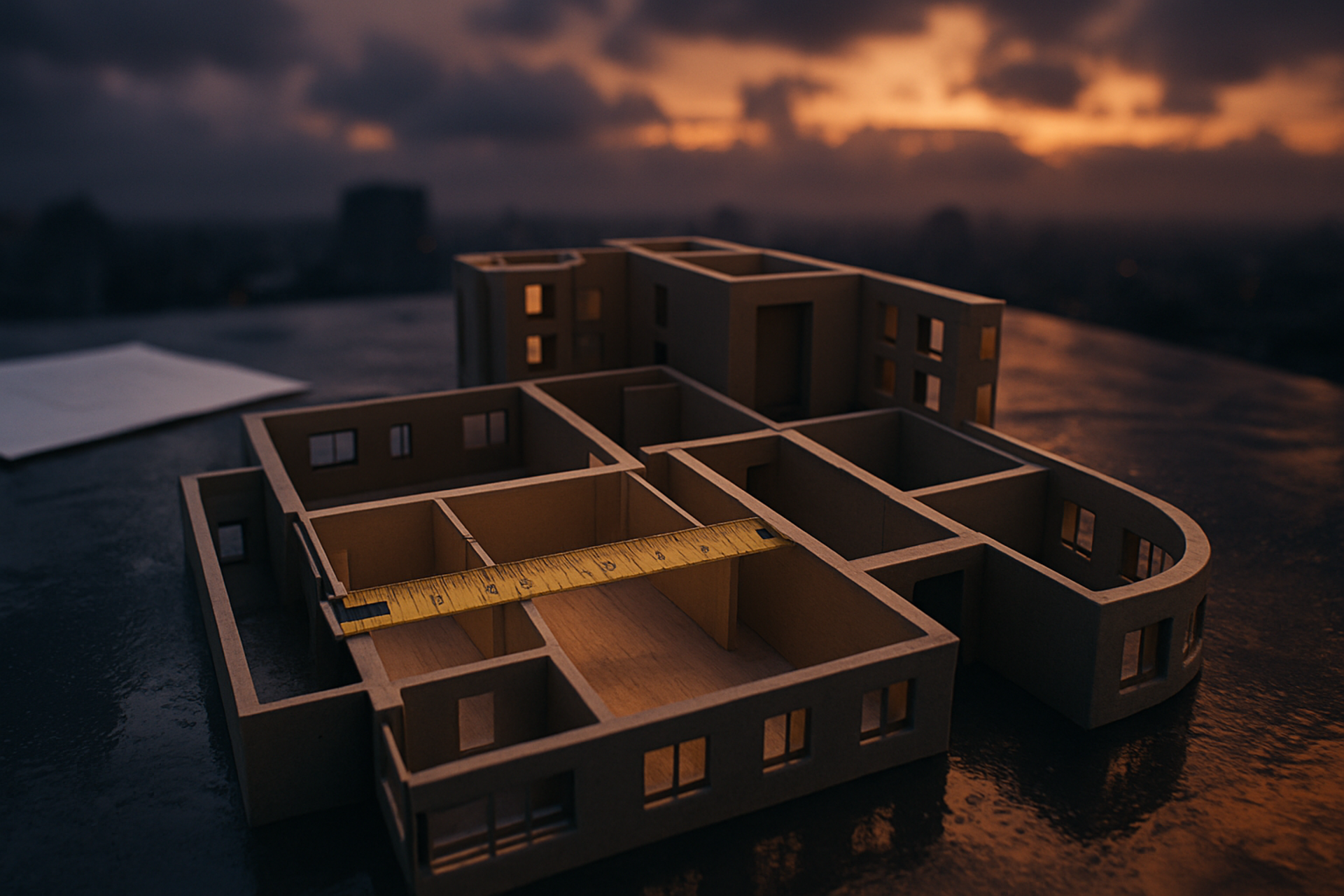
Carpet area is the net usable floor area measured inside your flat's own walls, the space you could physically lay carpet over. It excludes the thickness of external walls, service shafts, exclusive balconies and verandahs, and open terraces, but it does include internal partition walls within the unit.
This is the definition UP RERA works with, and it is why RERA filings for any registered Noida project must state carpet area explicitly rather than relying on vaguer builder terms.
- Includes: internal partition walls inside the flat
- Excludes: external wall thickness, service shafts, exclusive balcony or verandah, open terrace
- Basis for RERA disclosure and, per Noida reporting, for registry and stamp duty calculation
What does super area add on top of carpet area?
Super area, sometimes called saleable area, typically adds the thickness of external walls plus a proportionate share of common areas such as lift lobbies, staircases, corridors, and shared shafts across the building or tower.
It is a builder-side marketing and pricing figure, not a regulatory measurement. Two projects quoting the same super area price per sq ft can hand over very different amounts of actual usable space, depending on how much common-area load each one adds.
- Wall thickness of the unit's own external walls
- A proportionate share of lobbies, lifts, staircases, corridors, and other common facilities
- No fixed, universal formula, so the loading percentage varies project to project
How much extra do you pay for super area versus carpet area?
There is no fixed statutory percentage; the actual gap between super area and carpet area, known as the loading, must be checked in each project's specific RERA filing and allotment letter rather than assumed.
Industry commentary commonly cites a loading in the broad range of approximately 20 to 25 percent over carpet area, but this is a general reference point, not a rule, and it can run higher or lower depending on tower design, number of lifts, lobby size, and amenity allocation. Treat any percentage you hear as a starting point for verification, not a fact to rely on when signing.
- Ask the developer for the exact carpet area in sq ft, not just super area or built-up area
- Ask for the loading percentage in writing
- Cross-check both figures against the project's UP RERA registration document
Why does UP RERA say carpet area is what actually counts?
UP RERA has directed that apartments be sold and disclosed on a carpet area basis, stating that pricing on super area is contrary to the RERA Act, because carpet area is the only figure that reliably represents what a buyer is actually getting for their money.
Separately, reporting on Noida registry practice has indicated a push toward carpet area as the basis for deed registration and stamp duty calculation rather than super area or built-up area, which reinforces carpet area as the number that matters at every stage of a purchase, from booking to registry.
- UP RERA: apartments must be sold and disclosed on carpet area, not super area
- Noida registry and stamp duty practice has moved toward a carpet-area basis per dated local reporting
- Always verify the current registry basis on IGRSUP (igrsup.gov.in) before your own registration
Carpet area or super area: which should you compare when buying in Noida?
Use carpet area to compare price per sq ft across projects, because that is the space you can actually furnish and live in; super area is only useful as a secondary check on how much common-area load a project is charging you for.
A project that looks cheaper on a super area basis can quietly turn out to be more expensive per usable sq ft once you divide the same total price by carpet area instead. This gap matters most for budget-conscious buyers, where every extra sq ft of unusable loading is money spent on shared corridors rather than your own rooms.
| Metric | What it measures | Where to find it |
|---|---|---|
| Carpet area | Actual usable floor space inside your flat's walls | UP RERA project filing, allotment letter |
| Built-up area | Carpet area plus wall thickness of your own unit | Sometimes shown in brochures, not a RERA-mandated term |
| Super area / saleable area | Built-up area plus a share of lobbies, lifts, corridors | Builder price list, should be cross-checked against RERA carpet figure |
| Loading percentage | Gap between super area and carpet area, expressed as a percentage | Calculate yourself: (super area minus carpet area) divided by carpet area |
Does carpet area or super area matter more for affordable and budget Noida flats?
Carpet area matters more for budget buyers, because a lower headline price quoted on super area can mask a high loading percentage that leaves you with less usable room than a slightly costlier project with lower loading.
For a buyer working with a fixed budget, the practical move is to ask every shortlisted project for its RERA-registered carpet area and then calculate your own effective rate per sq ft of carpet area. This turns a brochure comparison into an apples-to-apples number, and it protects against the common pattern where a project markets an attractive super area price while quietly carrying a higher common-area load than a comparable project from a different developer.
- Calculate price divided by carpet area for every shortlisted project, not price divided by super area
- Compare loading percentages across projects before assuming a lower quoted price is genuinely cheaper
- Treat any brochure figure without a RERA carpet-area cross-check as provisional
What should you verify before booking any Noida flat?
Verify the registered carpet area, the developer's RERA registration number, and the project's disclosed common-area loading before paying any booking amount, since these three checks catch most area-related disputes before they happen.
For example, if a developer mentions an M3M project or any other builder's project in Noida, confirm the RERA registration number and current status directly on the UP RERA portal rather than relying on secondary reporting. The same discipline applies to any project search, whether it is from Gaurs Group, ATS Greens, Godrej Properties, Mahagun, or any other developer active in Noida: the RERA filing, not the brochure, is the document that legally defines carpet area, phase, and delivery terms.
- UP RERA registration number and current project status
- Registered carpet area in sq ft, not just super area or built-up area
- Loading percentage and what common areas it covers
- Whether the unit is leasehold on a 99-year lease and what Transfer Memorandum charges may apply on resale
- Registry and stamp duty basis, confirmed on IGRSUP at the time of your own transaction
Is it a loss or a fair deal if you paid on super area basis?
It is not automatically a loss, but you should quantify it: calculate your actual price per sq ft of carpet area from your allotment letter and compare that figure against current listings and RERA filings for comparable projects in the same micro-market.
If your effective carpet-area rate is in line with or better than comparable options, paying on a super area quote was simply how the deal was structured, not a loss. If the loading turns out to be unusually high compared to similar projects nearby, that is useful information for negotiating on maintenance charges or for factoring into your resale expectations, but it does not retroactively change your legal ownership, which is defined by the carpet area stated in your registered documents.
How to verify this yourself
- Confirm the project's registered carpet area and RERA registration number on UP RERA (up-rera.in) before booking
- Ask the developer in writing for the loading percentage between super area and carpet area
- Check the current registry and stamp duty basis on IGRSUP (igrsup.gov.in) at the time of your transaction
- Review the allotment letter and payment plan for how area figures are stated, not just the brochure
- If leasehold, confirm the 99-year lease terms and Transfer Memorandum charges before resale planning
Sources and where to verify
- UP RERA directs developers to sell apartments as per carpet area, Times of India
- UP RERA says carpet area is what counts, not super built-up area, Times of India
- Noida homebuyers rejoice as flat registration moves to carpet area, Hindustan Times
- Deed uniformity: carpet area to be sole basis for registry in Noida, Times of India
- UP RERA official portal
Continue your Noida research
Frequently Asked Questions
What is the difference between super area and carpet area in Noida flats?+
Carpet area is the actual usable floor space inside your flat's own walls, while super area adds wall thickness plus a share of common areas like lifts, lobbies, and corridors. UP RERA requires apartments to be sold and disclosed on carpet area, so that is the number to use for genuine price comparison.
How much extra do I pay for super area in a Noida apartment?+
There is no fixed statutory percentage; the loading between super area and carpet area varies by project and must be checked in that specific project's RERA filing and allotment letter. A commonly cited industry range is roughly 20 to 25 percent over carpet area, but treat this only as a starting point for verification, not a guaranteed figure.
Carpet area vs super area, which should I look at when buying in Noida?+
Look at carpet area first, since it is the RERA-mandated basis for sale and disclosure and represents the space you can actually use. Super area is a secondary check to understand how much common-area loading a project is charging you for.
Does carpet area or super area matter more for affordable Noida flats?+
Carpet area matters more for budget buyers, because a lower super area price can hide a high loading percentage and leave you with less usable room than a comparable project. Always divide price by carpet area, not super area, when comparing options on a fixed budget.
Is buying on a super area basis a loss for the buyer?+
Not automatically; it depends on your effective price per sq ft of carpet area compared against similar projects nearby. Calculate that number from your own allotment letter before concluding whether the deal was fair or expensive relative to the micro-market.
Is stamp duty and registry in Noida based on carpet area or super area?+
Reporting on Noida registry practice has pointed toward carpet area as the basis for deed registration and stamp duty rather than super area or built-up area, but the current rule in force should always be confirmed on IGRSUP at the time of your registration.
Tags