Which low-density luxury projects in Noida offer real space?
Looking for peace and space in Noida? Here is how to verify low-density luxury projects before you shortlist.
Answer: Low-density luxury in Noida means fewer units per acre, fewer apartments per floor and larger open areas, mostly concentrated on the Noida Expressway corridor including Sectors 94 to 98. Projects advertising density metrics like units-per-acre and apartments-per-floor should be checked against their UP RERA filing before being trusted, since brochure claims and registered specifications can differ.
Evidence-led guide: we do not quote live prices, approvals or returns as our own claims. Verify project-specific facts on the official sources linked below before acting.
What does low density actually mean in a Noida luxury project?
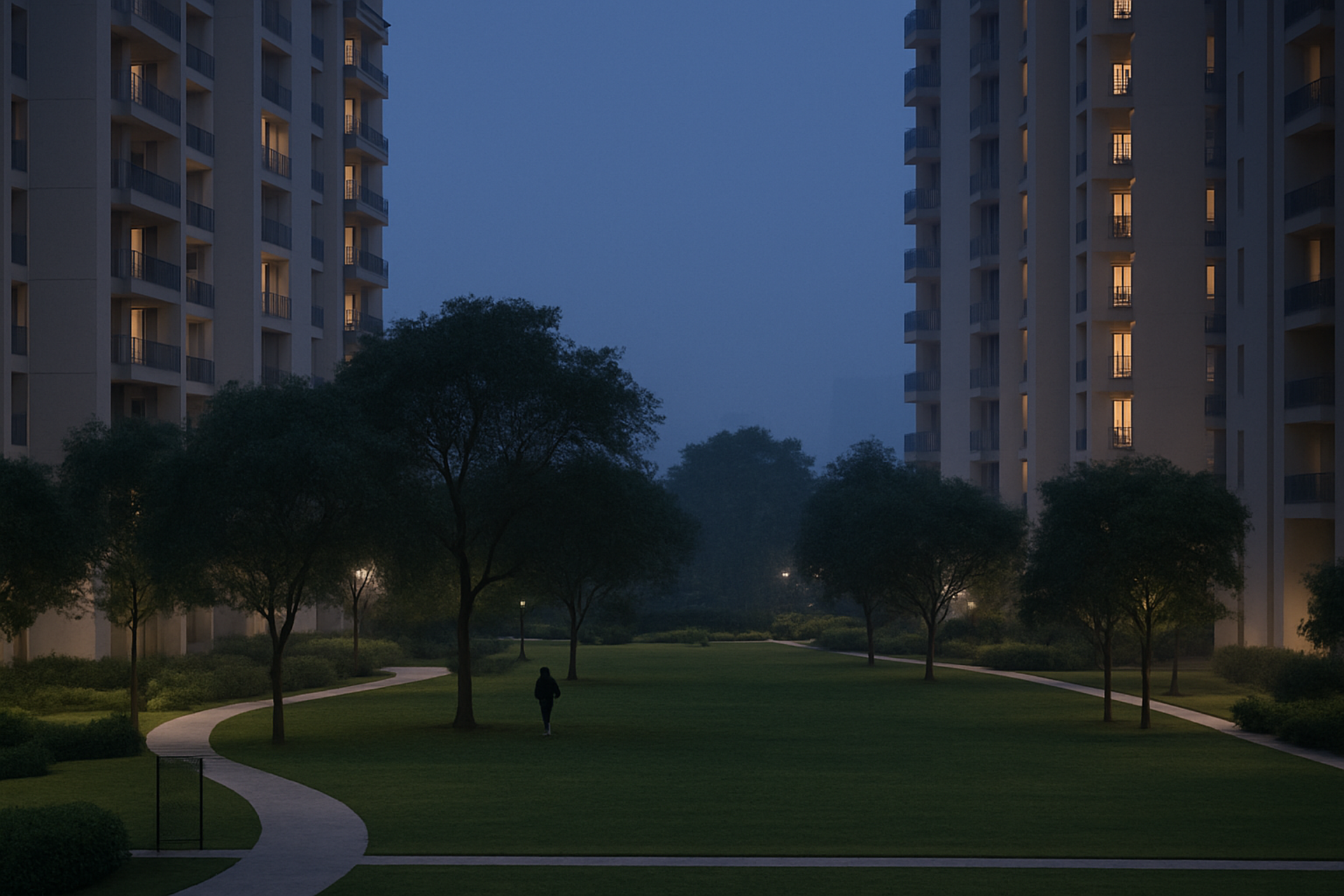
Low density refers to a measurable ratio, not a marketing adjective. It usually combines three numbers: total units built on the land parcel, apartments per floor in each tower, and the percentage of the plot left as open or landscaped area rather than built-up structure. A project with 300-400 units spread across 10-15 acres with two apartments per floor sits at the lower end of density compared to typical Noida high-rises that pack 8-12 units per floor across similar land.
Buyers chasing peace and space should ask for the RERA-registered layout plan, not just the sales brochure, because the final sanctioned density can only be confirmed through the project's UP RERA page (up-rera.in), which lists registered unit count, tower-wise configuration and open area as filed with the authority.
What are the top low-density luxury projects in Noida right now?
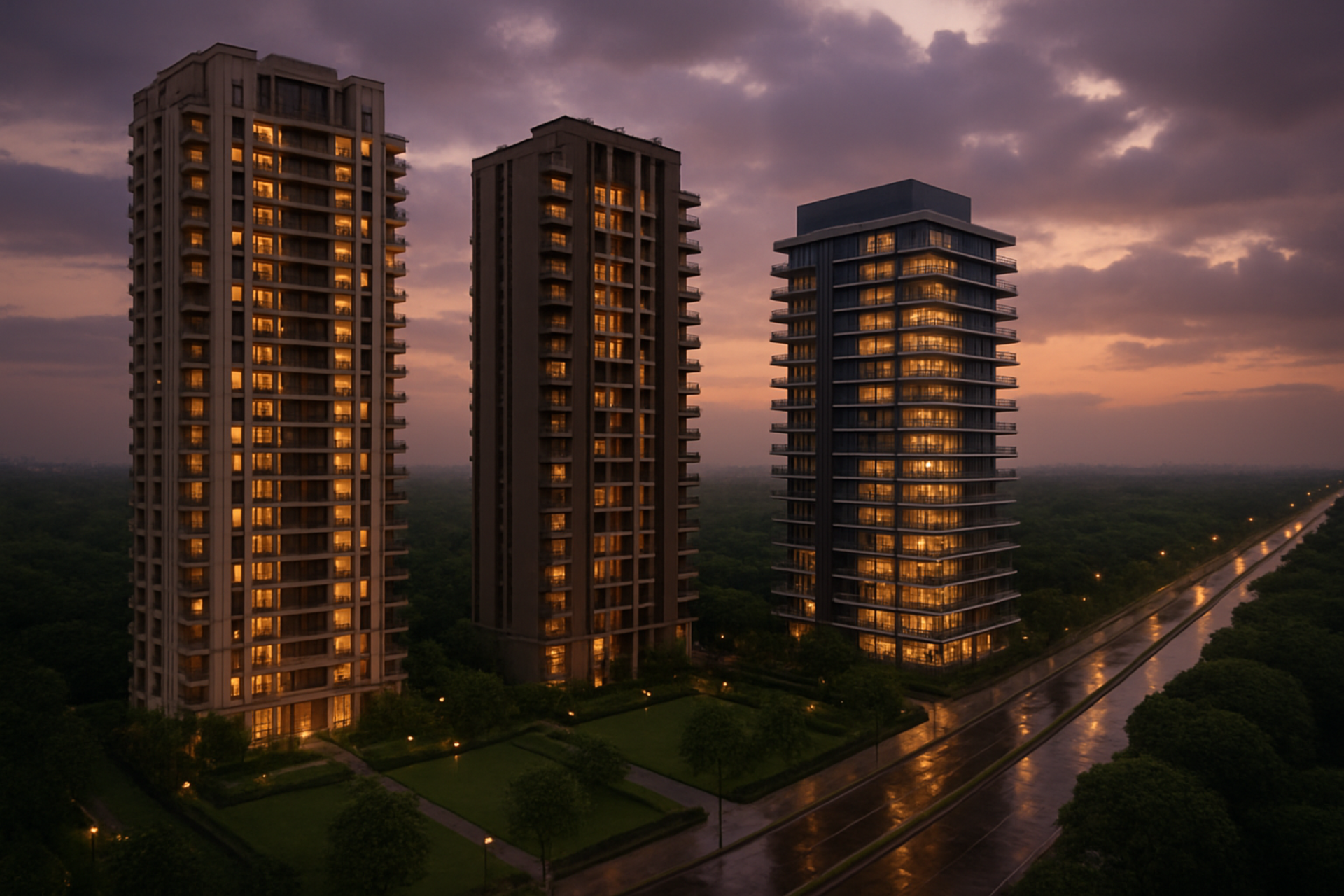
Among projects on the Noida Expressway belt that market themselves specifically on density metrics, M3M The Cullinan in Sector 94 is positioned by its developer as a 13-acre address with 374 residences and two apartments per floor in its 4 BHK and 5 BHK towers, which is a genuinely low ratio if confirmed against the RERA filing. This kind of specific, checkable claim, units per acre and apartments per floor stated together, is what buyers should look for from any developer, not just M3M.
Other Noida Expressway and Billionaires' Corridor developers also compete on similar space-led positioning. Godrej Properties, ATS Greens, Gaurs Group and Experion Developers have all marketed low-rise or lower-density configurations in various NCR launches, and each should be judged the same way: by its own UP RERA entry rather than by brochure comparisons. Sobha and Prestige Group, both known for larger-format luxury units with wider setbacks, are relevant names to check when a buyer is comparing finish quality and unit sizing across developers active in the Delhi-NCR luxury segment generally.
Not every project carrying a luxury or lifestyle label is actually a low-density residential option. Mixed-use or commercial-led addresses, where a large share of inventory is studios, retail or serviced suites rather than full-size apartments, should not be compared on residential density terms at all, since their unit mix and buyer purpose are fundamentally different.
How do you check units per acre and apartments per floor before buying?
Start with the UP RERA registration certificate, which lists the sanctioned number of units, tower configuration, and often the carpet area breakdown for each apartment type. This document is the only reliable source for density figures, since a developer's early marketing material can describe plans that are later revised before final sanction.
Next, request the layout plan approved by the NOIDA Authority, which shows plot coverage, open area percentage and setback distances between towers. A genuinely low-density project will show meaningful distance between tower blocks and a lower footprint-to-plot ratio than a typical high-rise cluster.
Finally, cross-check the unit count against the land area stated in both the RERA filing and the Authority-approved layout. If a brochure claims a certain acreage but the RERA page shows a different total plot size, treat that as a flag requiring direct clarification from the developer or a site visit with documentation in hand.
- UP RERA certificate: sanctioned unit count and tower-wise configuration
- NOIDA Authority layout plan: open area percentage and setbacks
- Plot area cross-check: brochure acreage versus RERA-filed acreage
- Apartments-per-floor count: verify against the specific tower, not the project average
- Carpet area versus super area: confirm what is actually being sold
Which Noida sectors actually offer low-density luxury positioning?
Within the city's established luxury corridor, Sectors 94, 97, 98 and the broader Sector 94-98 stretch often called the Billionaires' Corridor or the Sector 94-98 luxury belt carry the strongest low-density marketing because they sit on larger assembled land parcels along the Noida Expressway, away from the denser, older sector grids closer to the Delhi border.
Sector 72, part of the same expressway-facing zone, has seen a mix of residential and mixed-use commercial development. Projects there should be evaluated individually since not every address in a premium-sounding sector is built on the same low-density principle, some are high-rise residential, others are retail or studio-led mixed-use formats with a completely different unit mix and purpose.
Buyers comparing sectors for peace and space should look at Noida Expressway proximity, distance from upcoming NMRC metro stations for connectivity, and the land parcel size behind each specific project rather than assuming an entire sector is uniformly low-density.
Does a low-density project in Noida cost more per square foot?
Generally yes, because lower density means fewer units are sold against the same land and construction cost, so developers typically price low-density luxury inventory at a premium compared to high-rise projects of similar location and finish quality. The exact premium varies by project, tower, floor and current market conditions, so any specific price per square foot should be verified directly with the developer's sales office and cross-checked against recent registered transactions on IGRSUP (igrsup.gov.in) rather than taken from a brochure or a listing portal.
Buyers should also factor in maintenance charges, which can be higher in low-density luxury developments due to larger common areas, landscaping and amenity-to-resident ratios, and these figures should be confirmed through the project's RERA filing or the builder-buyer agreement before signing.
What objections do buyers raise about low-density luxury claims?
The most common objection is that density claims are marketing language that cannot be independently verified by a buyer without technical access to layout plans. This is a fair concern, and the only real answer is persistence: request the RERA certificate number, look it up directly on up-rera.in, and ask the developer's sales team to walk through the approved layout rather than just a rendered masterplan image.
A second objection concerns phased development, where a project's first tower may be genuinely low-density but later phases on the same land parcel could add more towers and raise overall density over time. Buyers should check whether the RERA registration covers the full land parcel in one phase or multiple phases, and read the specific phase registration that applies to the unit being purchased.
A third concern, raised especially around Sector 72 projects that blend retail and residential-style branding, is that mixed-use addresses sometimes borrow luxury residential language for what is actually a commercial or studio-apartment product. Buyers seeking a full-size low-density home should confirm the actual unit configuration, typical apartment size and intended use (residential versus commercial) before assuming a project matches a peace-and-space brief.
What should a buyer check before shortlisting a low-density luxury project?
Before shortlisting, a buyer should independently confirm five things: the UP RERA registration status and sanctioned unit count, the NOIDA Authority-approved layout and open area percentage, the leasehold tenure terms since most Noida land parcels are allotted on a 99-year lease, the Transfer Memorandum process and charges applicable on resale units, and the developer's documented delivery record on at least two to three completed projects in the NCR region.
None of these checks require specialised expertise, only time and the willingness to request documents rather than rely on sales presentations. A project that genuinely offers low density and ample space will have nothing to hide in its RERA filing, since the registered numbers are a matter of public record.
How to verify this yourself
- Confirm sanctioned unit count, tower configuration and apartments-per-floor on the project's UP RERA certificate at up-rera.in
- Cross-check the NOIDA Authority-approved layout plan for open area percentage and tower setbacks
- Verify plot area consistency between brochure claims and the RERA-filed land parcel size
- Confirm leasehold tenure terms and Transfer Memorandum charges applicable on resale through the builder-buyer agreement
- Check recent registered transaction values for the project or sector on IGRSUP before agreeing to a quoted price per square foot
- Review the developer's documented delivery record on at least two to three completed NCR projects before shortlisting
Sources and where to verify
Continue your Noida research
Frequently Asked Questions
Is buying a low-density luxury project in Noida worth it or a loss?+
It is conditionally worth it if the density, RERA registration and land parcel details are independently verified and the premium price aligns with genuine space benefits like larger carpet area, fewer neighbours per floor and real open area, rather than just brochure language; buyers who skip verification and rely only on marketing claims risk overpaying for a space promise that the registered layout does not actually support.
What is considered low density for a Noida apartment project?+
There is no single regulatory threshold, but buyers generally treat two to four apartments per floor and a few hundred total units spread across ten or more acres as low density compared to typical high-rise Noida projects that pack eight to twelve units per floor on much smaller land parcels, and the only reliable way to confirm either figure is the project's UP RERA filing.
Are low-density luxury projects in Noida leasehold or freehold?+
Most Noida Authority-allotted land, including land used for luxury residential projects, is on a 99-year leasehold basis rather than freehold, and buyers should confirm the lease tenure, renewal terms and any Transfer Memorandum charges applicable on resale directly through the builder-buyer agreement and the NOIDA Authority before purchase.
Should I trust a developer's claim of fewer apartments per floor without checking?+
No, any density claim including apartments-per-floor or units-per-acre figures should be checked against the project's UP RERA registration certificate, since brochure and pre-launch material can describe configurations that are revised before final sanction, and the RERA filing is the only document with legal weight on actual registered unit counts.
Does a mixed-use or commercial project count as low-density luxury housing?+
No, mixed-use projects that combine retail, studios or serviced suites with a small residential component should not be compared against full residential low-density projects, since their unit mix, buyer purpose and density calculations work differently, and a buyer specifically seeking a peaceful low-density home should confirm a project's actual residential unit configuration before shortlisting it.
Which Noida sectors are best known for low-density luxury positioning?+
The Noida Expressway stretch covering Sectors 94, 97 and 98, often called the Billionaires' Corridor or the Sector 94-98 luxury belt, along with parts of Sector 72, has the largest assembled land parcels in the city and the most projects actively marketed on low-density terms, though each specific project within these sectors should still be verified individually rather than assumed low-density by location alone.