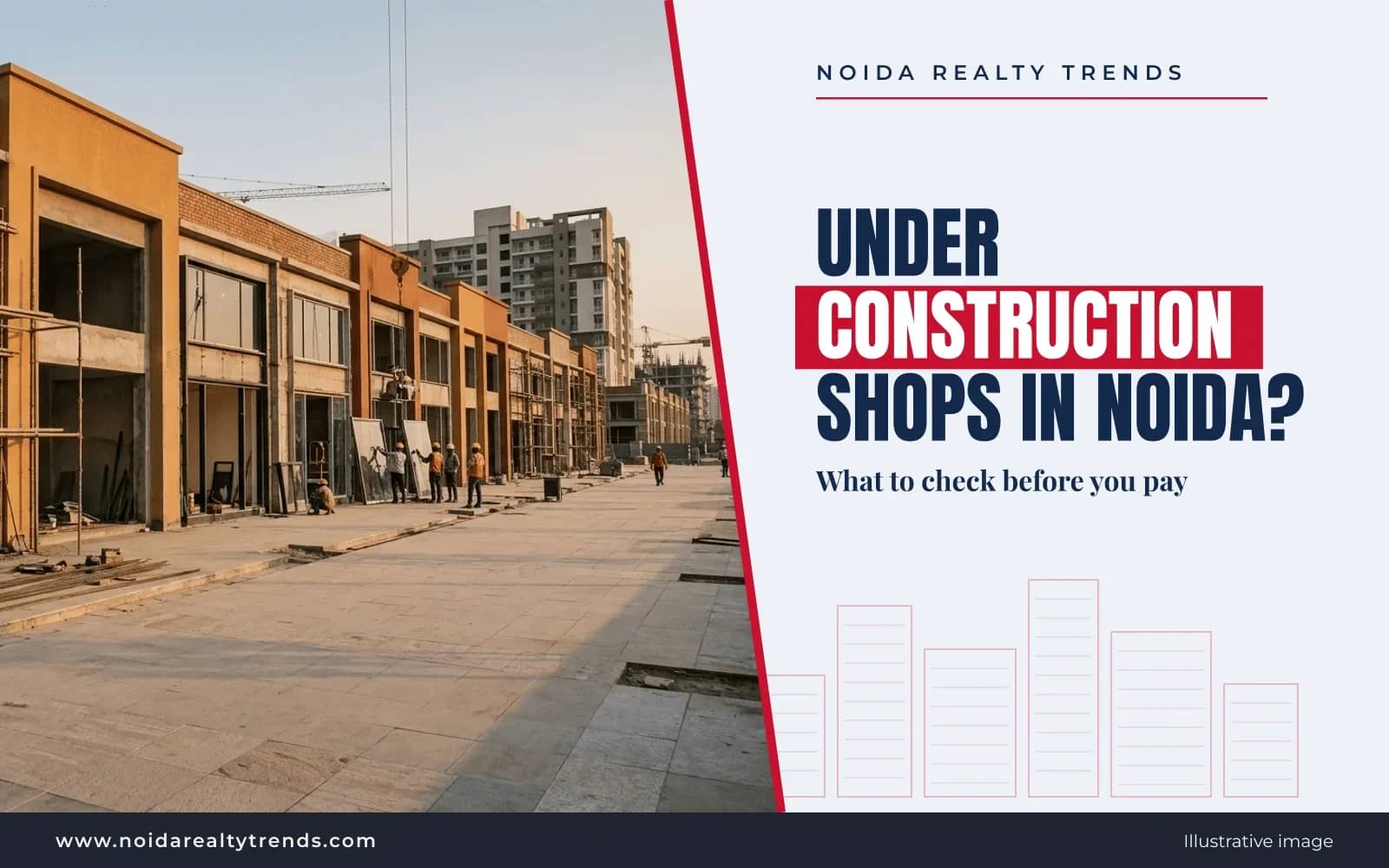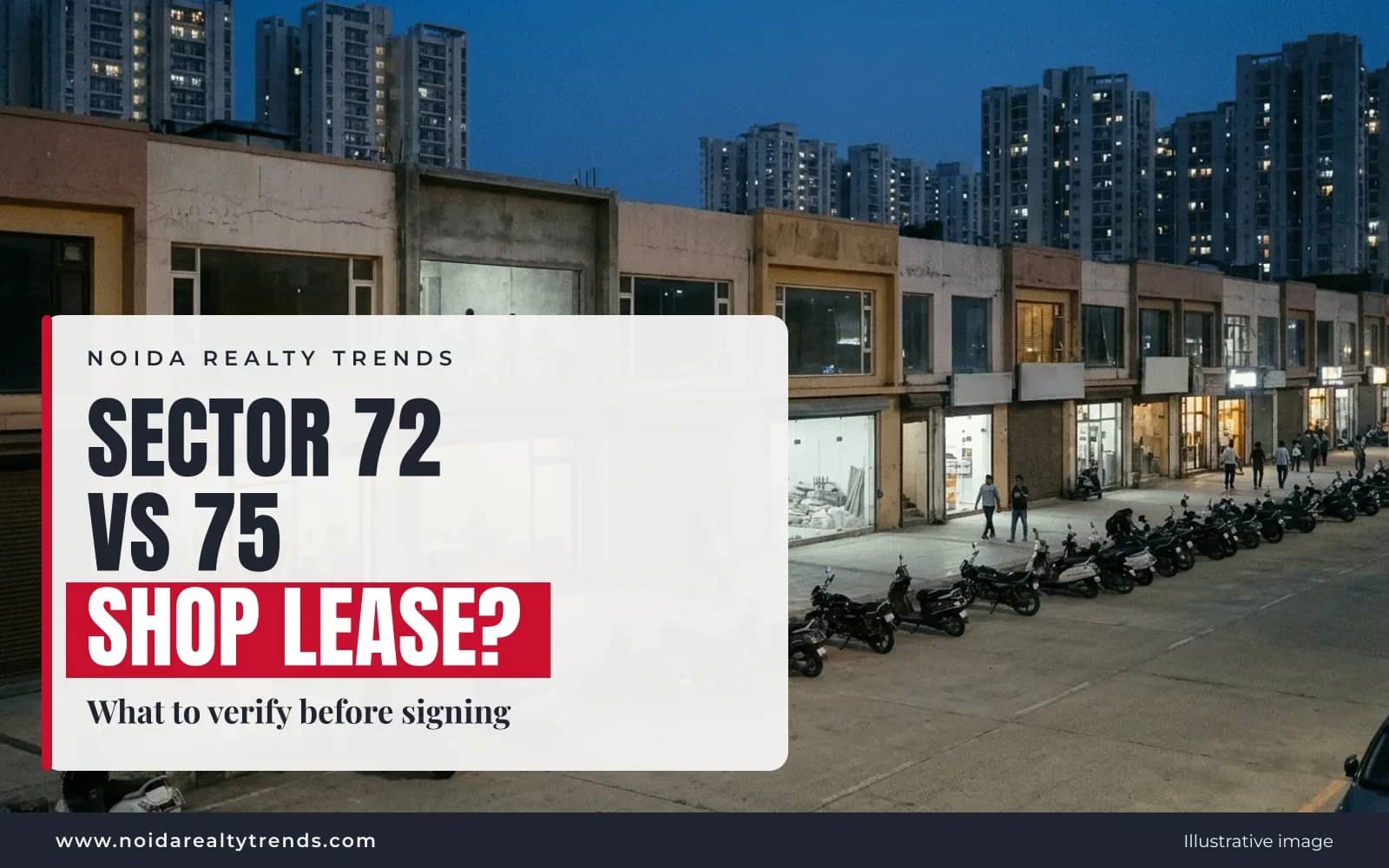
Buying a retail shop in Noida? 12 mistakes to avoid
Carpet area, leasehold terms, assured-return claims and hidden charges: what Noida retail shop buyers must verify before paying a token.
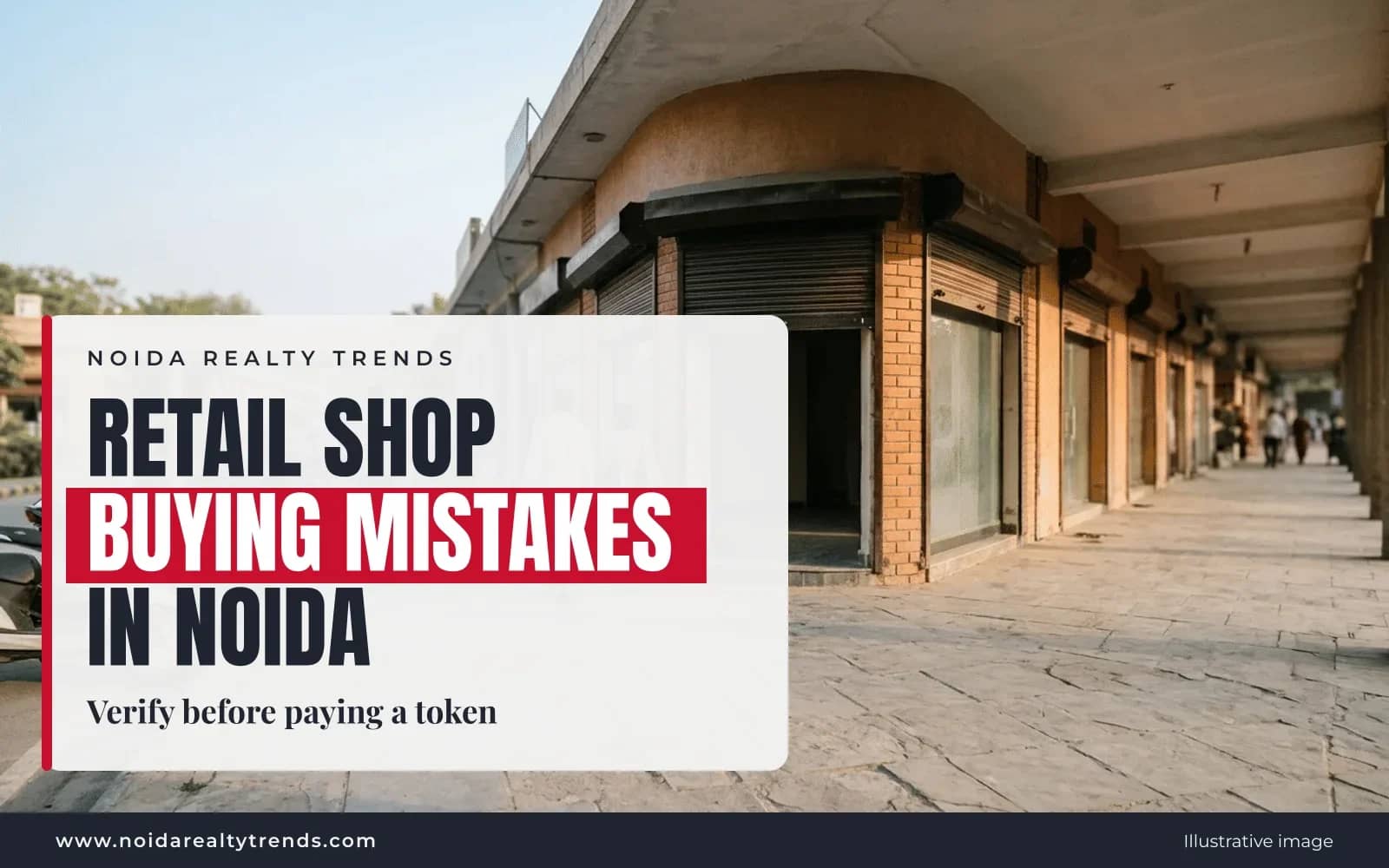
Answer: The biggest mistakes are treating a brochure as proof of RERA approval, confusing super area with carpet area, assuming freehold when the land is leasehold, trusting assured-return promises without a verified lease, and underestimating taxes, maintenance and fit-out costs. Budget the full acquisition cost, not just the quoted rate, and verify every document independently through UP RERA, the project's conveyance papers and an independent lawyer before paying any token amount.
Evidence-led guide: we do not quote live prices, approvals or returns as our own claims. Verify project-specific facts on the official sources linked below before acting.
What is the single biggest mistake retail shop buyers make in Noida?
The single biggest mistake is treating a sales brochure, floor-plan rendering or a verbal commitment from a sales executive as if it were a regulatory approval. A project being actively marketed does not automatically mean it carries a clean, current RERA registration for the specific phase or tower the shop sits in.
Before any token payment, pull up the project and promoter on the official UP RERA portal (up-rera.in) and cross-check the registration number quoted in the brochure against the listing for Gautam Buddha Nagar district. Large mixed-use developments across the Noida commercial belt appear on this public database, and the registration status, promoter details and project timeline are all listed there for free. If a shop or tower is not traceable, treat that as a stop sign, not a negotiating point.
How do carpet area and super area mistakes inflate the real cost?
Comparing shops only on the quoted per-square-foot rate without checking whether that rate applies to carpet area or super area is how buyers end up paying far more than they think per usable square foot. A unit quoted at a lower rate per square foot on super area can carry a higher loading percentage and end up more expensive on actual carpet area than a seemingly pricier unit with tighter loading.
Always ask for the carpet area, saleable or super area, and the loading percentage in writing, then recalculate every competing shop across any commercial project on a carpet-area basis before comparing. This single step is the fastest way to avoid an apples-to-oranges purchase decision.
Is retail property in Noida freehold or leasehold, and why does it matter?
Most commercial land in Noida is allotted by the authority on a long-term lease, commonly structured around a 90-year land lease, with the buyer acquiring rights through a sub-lease or conveyance deed rather than outright freehold title. UP RERA project documents show this sub-lease and conveyance structure explicitly, and buyers who assume freehold ownership without reading the conveyance proforma can be caught off guard at resale or transfer.
This matters because leasehold rights typically come with conditions: authority permission requirements before transfer, dues clearance, and restrictions until the project receives its completion certificate. UP RERA commercial lease documents on file state plainly that transfer requires prior written permission and may be restricted until completion certification is granted. Ask your lawyer to walk through the exact lease tenure, renewal terms and Transfer Memorandum process for the specific shop before signing anything.
Why is an assured-return promise a red flag, not a selling point?
An assured or guaranteed rental return offer should be treated as a due-diligence red flag, not a benefit, because it is not rental income until it is backed by a registered lease, a named paying entity, security, and a defined default remedy. Marketing language like guaranteed rent or assured return has no automatic legal enforceability and has been at the center of disputes in Noida and elsewhere in NCR when developers or lease guarantors stopped paying.
Before relying on any such claim, demand the contractual payer's identity, the security deposit or bank guarantee backing the promise, the payment schedule, tax treatment, lock-in period and what happens if the payer defaults. Ask for evidence of actual signed leases and rent receipts from similar units in the same project, not a projected number in a sales sheet. If the seller cannot produce a registered lease agreement, assume the return is speculative.
What commercial-use and anchor-tenant checks get skipped most often?
Buyers frequently skip verifying whether their specific unit's permitted use actually allows their intended business, and whether a promised anchor tenant has signed a binding lease or merely appears on a proposed tenant list. Authority zoning documents describe permitted commercial activities as subject to zoning regulations, and certain uses such as food preparation with open flame, specific medical services, liquor sale or heavy signage may require separate approvals or may be excluded altogether in a given unit or block.
Ask in writing whether your shop's zoning permits your intended business, and ask for the signed lease, not a marketing slide, if an anchor or branded tenant is cited as a reason to buy. A named retail chain appearing in a brochure is not proof that chain has committed to that specific project.
How much should you actually budget for a retail shop in Noida?
There is no single reliable per-square-foot figure that applies city-wide, because price depends on the sector, specific project, floor, frontage, carpet area and construction stage, so any number quoted to you should be verified independently against current UP RERA filings, comparable registered transactions and actual leased units in that project, not taken as a market constant.
Build your budget as a full stack rather than a single rate: base consideration, GST where applicable, stamp duty and registration (verify the current rate and any applicable rebate on IGRSUP, igrsup.gov.in), authority transfer or sub-lease charges, maintenance and sinking-fund deposits, fit-out and equipment cost, financing cost if you are taking a loan, and a working-capital reserve to cover vacancy. Request a written all-in cost sheet from the seller covering every line below before you negotiate the headline price.
- Carpet area and super area, with loading percentage shown separately
- Basic price plus any floor-rise, corner or frontage premium
- Parking allocation and cost
- GST applicability and invoice treatment
- Stamp duty and registration estimate, verified on IGRSUP
- Maintenance deposit, IFMS and sinking fund
- Electricity load and utility connection charges
- Possession date, fit-out period and rent-commencement date
- Cancellation, delay and refund clauses
What footfall and location checks matter more than the price per square foot?
A shop's commercial viability depends far more on visible footfall, road visibility, parking access and the surrounding tenant mix than on its listed price per square foot, and this is the check most first-time buyers skip entirely. Visit the actual site, not the sales lounge, on a weekday afternoon, a weekend evening and a working-day morning, and physically count passing footfall, note whether the shop is visible from the main carriageway or tucked behind a ramp, and check what parking is actually available at peak hours.
Also map the neighboring tenants: a ground-floor unit next to an established anchor or high-frequency category such as a supermarket or food court tends to perform differently from an isolated upper-floor unit, regardless of what either costs per square foot. This applies to any commercial address; footfall is a site fact, not a brochure claim.
What documents should an independent lawyer check before you sign?
An independent lawyer, not the developer's panel advocate or the broker, should review the land allotment letter or lease deed, the development agreement, sanctioned building plans, the encumbrance and dues status, and the draft sub-lease or conveyance deed before you pay beyond a token amount. Each of these documents should match the unit number, floor, carpet area and permitted use stated in your agreement to sell, with no unexplained gaps.
Separately, have an architect or engineer verify that the shop's actual constructed dimensions, access points and utility connections match the sanctioned plan, since post-possession disputes over area or access are common when this step is skipped. Spend on this verification before registration, not after a dispute arises.
How to verify this yourself
- Confirm the project and promoter's current registration status directly on the UP RERA portal (up-rera.in) before any payment
- Verify the land lease tenure, sub-lease or conveyance structure and Transfer Memorandum conditions in the project's registered documents
- Recalculate every competing shop's price on a carpet-area basis after obtaining the loading percentage in writing
- Request a signed lease agreement and rent receipts as evidence for any assured-return or anchor-tenant claim, not a brochure projection
- Check the current stamp duty, registration charges and any applicable rebate on IGRSUP (igrsup.gov.in)
- Have an independent lawyer and architect verify title documents, sanctioned plans and actual site dimensions before registration
Sources and where to verify
- UP RERA official portal
- UP RERA district-wise project list, Gautam Buddha Nagar
- UP RERA conveyance deed proforma, PI City Center
- UP RERA conveyance deed, Delta Square
- IGRSUP, Uttar Pradesh stamp and registration department
Continue your Noida research
Frequently Asked Questions
What mistakes should I avoid when buying a retail shop in Noida?+
Avoid treating a brochure as proof of RERA approval, confusing carpet area with super area, assuming freehold ownership on leasehold land, trusting assured-return claims without a verified lease, and underestimating stamp duty, maintenance, GST and fit-out costs. Verify every document independently on UP RERA and through your own lawyer before paying a token amount.
Is buying a retail shop in Noida a loss or a profit in 2026?+
It depends entirely on the specific unit, not the city generally: a shop with verified RERA registration, clear leasehold terms, genuine footfall and a realistic rent assumption can perform, while a unit bought on an assured-return promise, inflated super area pricing or unverified anchor-tenant claims is structurally exposed to loss. Model net yield using actual comparable rents, not marketing projections, before deciding.
How much should I budget for a retail shop in Noida beyond the quoted price?+
Budget for GST where applicable, stamp duty and registration (verify current rates on IGRSUP), authority transfer or sub-lease charges, maintenance deposit and sinking fund, fit-out and equipment, financing costs if applicable, and a vacancy reserve, since the all-in cost is typically well above the quoted base price alone.
Is a retail shop in Noida freehold or leasehold property?+
Most commercial retail units in Noida sit on authority-allotted leasehold land, commonly structured as a long-term lease, transferred to buyers through a sub-lease or conveyance deed rather than outright freehold title, so always read the specific project's conveyance proforma and transfer conditions before buying.
Should I trust a developer's assured rental return offer on a retail shop?+
No, an assured or guaranteed return claim should be treated purely as a due-diligence flag: demand the named paying entity, security deposit, payment schedule and a registered lease before assigning any value to it, since such promises carry no automatic legal enforceability if the payer defaults.
What should I check before signing an agreement to buy retail space in Noida?+
Check the project's current UP RERA registration, the exact carpet area and loading percentage, the land lease and conveyance terms, permitted commercial use for your business type, and the sanctioned building plan against actual site dimensions, ideally with an independent lawyer and architect reviewing the documents.
Tags