High Street or Mall Shop in Noida: Which One Actually Pays Rent?
High street versus mall shop investment in Noida compared on frontage risk, operator dependence, catchment and RERA checks, with a real ₹30 lakh budget reality check.
Answer: High street shops in a proven Noida catchment are generally the safer bet because returns depend on visible frontage and traffic rather than one mall operator's leasing success. Mall shops can outperform in a well-anchored, destination-led project but carry operator and footfall risk. With ₹30 lakh, most branded options in Sectors 72 and 94-98 sit above entry price, so verify unit pricing on UP RERA before assuming affordability.
Evidence-led guide: we do not quote live prices, approvals or returns as our own claims. Verify project-specific facts on the official sources linked below before acting.
What actually separates a high street shop from a mall shop in Noida
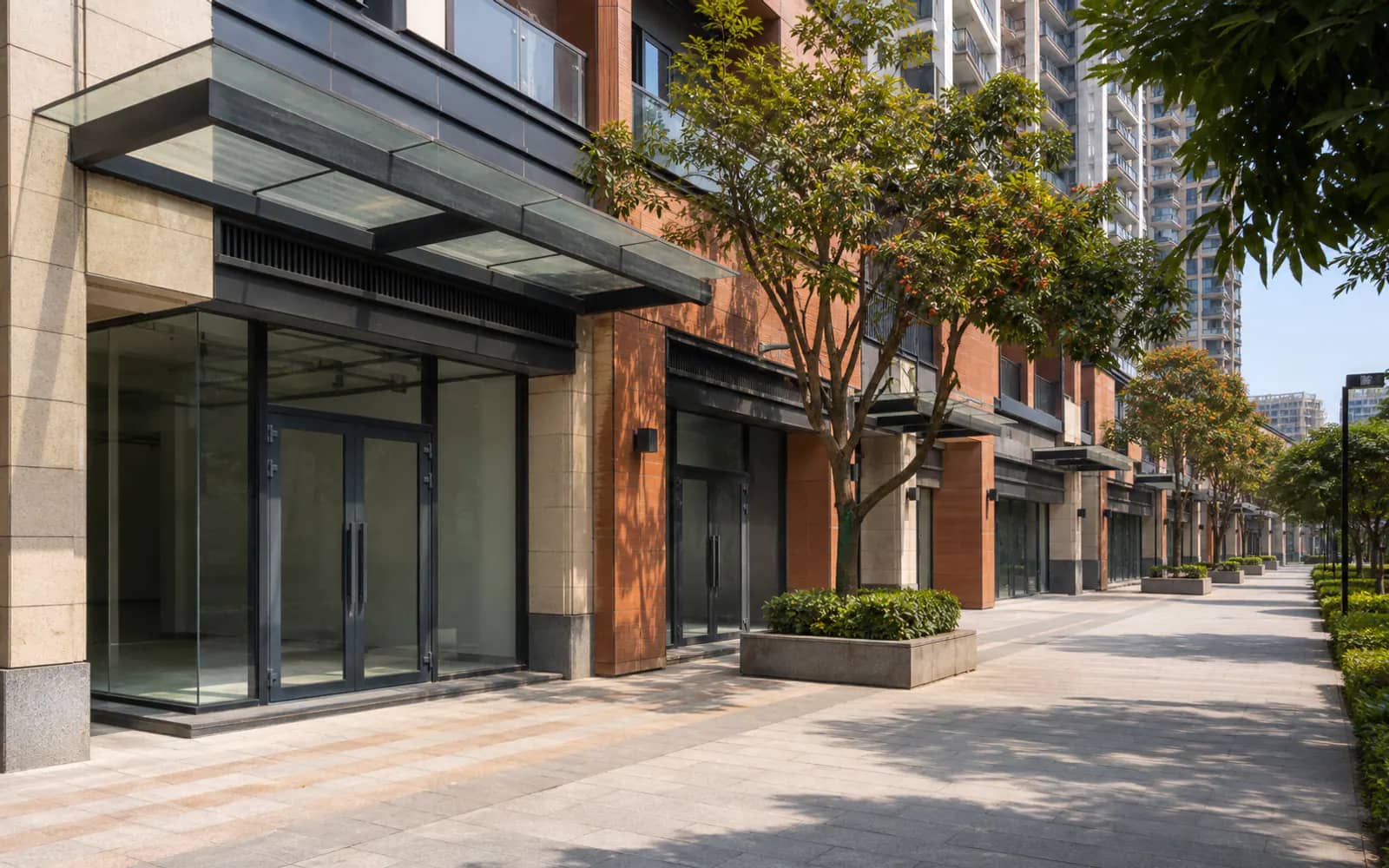
A high street shop opens directly onto a road or an open pedestrian frontage. Its value is tied to things you can verify by standing on the site: frontage width, visibility from moving traffic, parking availability, footfall density and the surrounding mix of homes and commercial activity. Nobody manages footfall for you here, the location either draws people or it does not.
A mall shop sits inside a managed retail environment. Its performance depends far more on the developer or mall operator: how the tenant mix is curated, whether anchor stores are signed and open, how common areas and parking are maintained, and whether footfall is actively sustained after launch. Two shops in the same mall can perform very differently depending on floor placement and visibility inside the layout, which is a risk high street units do not carry in the same way.
This is the core distinction worth remembering: high street investment is largely a location bet, mall investment is largely an operator and leasing bet. Neither format is automatically superior, the right choice depends on which risk you are more comfortable underwriting.
Which format gives better rental income in Noida
There is no universal winner. A mall shop in a genuinely destination-led project, with strong anchor brands and steady footfall, can generate better rental income than an average high street unit. But that outcome depends entirely on execution, a half-leased mall with weak anchors can sit vacant for years while a well-placed high street shop in a dense catchment keeps drawing walk-in demand regardless of who owns the building next door.
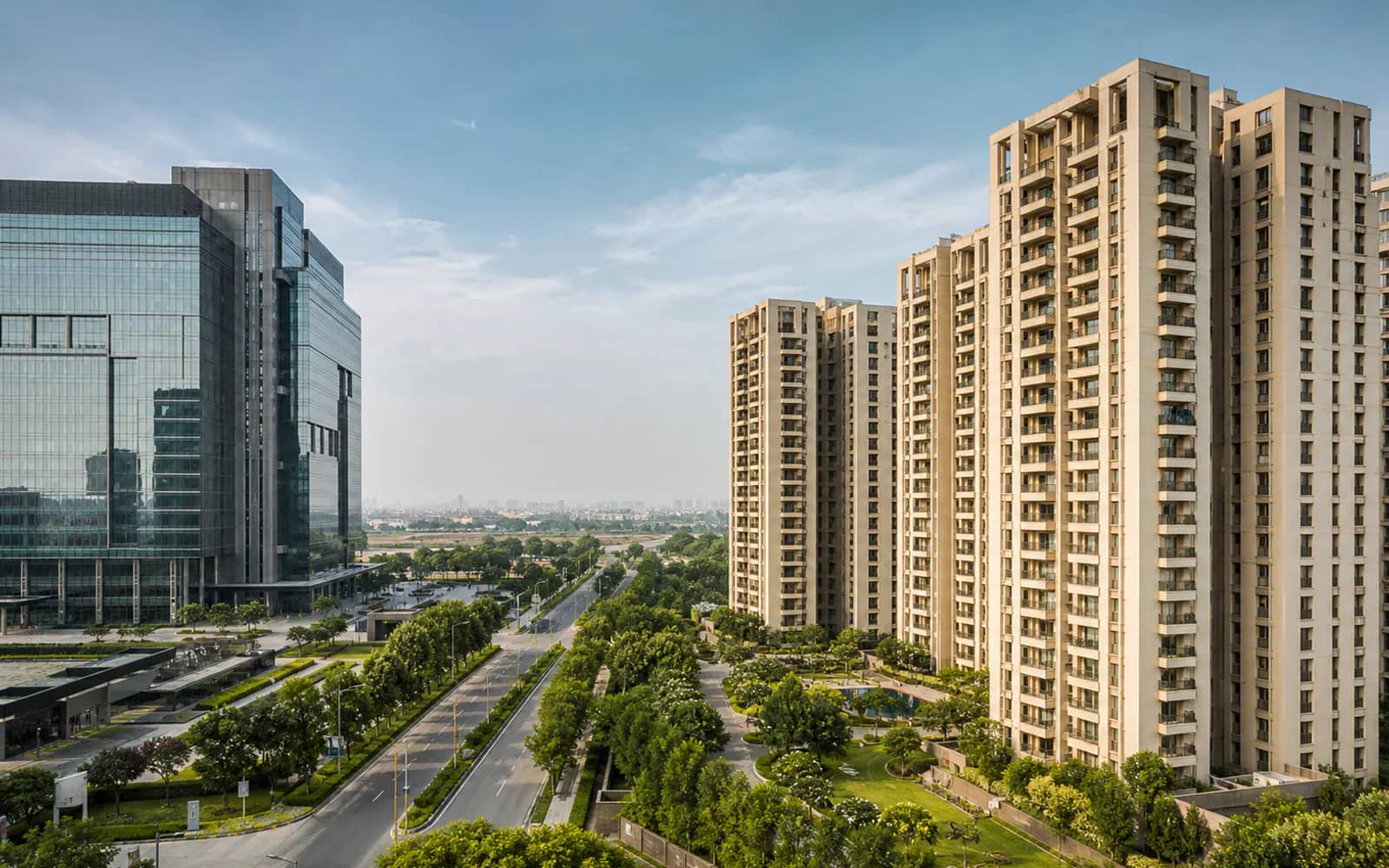
Noida's ongoing metro, expressway and mixed-use development is reshaping where retail catchments are forming, which means project quality and micro-location matter more than the high street versus mall label itself. Mixed-use developments that combine retail with residential towers and serviced apartments are increasingly being positioned as the premium retail story in Noida, since footfall from residents and visitors can cross-feed the retail component.
Any specific rental yield quoted for a project should be treated as a marketing estimate, not a guaranteed outcome, unless you can see it backed by actual signed lease agreements and audited occupancy data. Ask for this before comparing any two projects on "rental income."
How M3M's Sector 72 and Sector 94 projects illustrate the mixed-use approach
Noida's current retail supply includes projects that blend both formats rather than picking one. M3M The Line in Sector 72 is marketed as a mixed-use commercial development combining high-street retail with serviced apartments, reportedly registered with RERA under a project registration that should be confirmed directly on UP RERA before any decision.
In Sector 94, M3M's The Cullinan is positioned as a mixed-use project combining a high-street market, mall component, and studio apartments, with possession timelines reported in various listings. A related component, Cullinan Avenue, has been marketed with commercial units reported in third-party listings at varying prices, figures that must be verified on the project's RERA record or with the developer directly since listing prices can lag actual current pricing.
For readers evaluating Noida's Billionaires' Corridor belt spanning Sectors 94 to 98, the practical takeaway is that M3M is a RERA-registered developer active in both the high-street and mixed-use mall format within this stretch, giving buyers a documented reference point to compare against other listed projects rather than relying on word of mouth. Details on current inventory and layouts can be checked on the M3M India Noida official website.
Which is safer for a ₹30 lakh budget
Based on current listings, ₹30 lakh sits below the entry price for many branded retail shops in Noida's premium corridors, including projects positioned in Sectors 72 and 94-98. Quoted starting prices for these mixed-use projects have been reported well above that mark in several listings, so the honest first step is to check the current price list and floor-wise rates directly with the project or on UP RERA rather than assuming a ₹30 lakh unit is available in a flagship development.
If your capital is fixed at ₹30 lakh, two realistic paths exist. One is to look at a smaller ticket size in an established, lower-priced high-street micro-market where entry costs are more aligned with your budget. The other is to hold and accumulate additional capital rather than stretching into an under-construction premium unit through heavy leverage, which increases risk if possession timelines slip or leasing takes longer than expected.
Stretching a ₹30 lakh budget into a project priced meaningfully higher usually means taking on a larger loan or relying on future appreciation to bridge the gap, both of which increase your downside if rental income takes time to materialise after possession.
High street vs mall shop: side by side on verifiable criteria
This comparison uses only criteria you can independently check: how the format is structured, what documentation exists, and what practical due diligence applies. It is not a ranking of specific competing projects, since actual performance depends on execution within each project.
| Factor | High street shop | Mall shop |
|---|---|---|
| Primary risk driver | Location, frontage, footfall visibility | Mall operator leasing success and tenant mix |
| Dependence on single party | Low, multiple access points and tenants nearby | High, depends on mall management and anchor tenants |
| Verification needed | Site visit for frontage, traffic count, parking | Leasing status, anchor tenant list, occupancy data |
| Typical entry ticket in premium Noida projects | Varies by micro-market, check current listings | Often bundled into larger mixed-use project pricing |
| RERA check required | Yes, confirm project registration and possession date on UP RERA | Yes, confirm project registration, possession date and phase-wise approvals on UP RERA |
| Documentation to request | Layout approval, road-facing certification, parking allocation | Lease deed sample, anchor tenant agreements, common area maintenance terms |
What about the retail oversupply concerns in Sector 72
Sector 72 has seen several retail-commercial projects launch in recent years, including Spectrum Metro, Dasnac Arc and Central 50, and some market watchers have flagged oversupply as a concern for the sector's retail segment. This is a fair point to raise rather than dismiss.
The counter-argument that matters is catchment depth, not project count. Sector 72 and the wider Sector 94-98 Noida Expressway belt sit adjacent to dense residential and upcoming commercial catchments, and multiple retail projects can coexist if each targets a distinct footfall base, whether that is daily-needs high-street shopping, destination mall retail, or F&B and entertainment anchors. The question a buyer should ask is not "how many malls exist in this sector" but "what specific tenant mix and catchment does this particular project serve, and is that documented in its RERA filing and leasing disclosures." Oversupply risk is real at the sector level in aggregate, but it does not automatically apply equally to every individual project within it.
What to verify before signing on either format
Retail investment in Noida, whether high street or mall, carries the same non-negotiable checks regardless of format or developer.
- Confirm project registration, promoter details, sanctioned plan and possession date on UP RERA (up-rera.in) before paying any booking amount.
- Verify land title and prior registry history on IGRSUP (igrsup.gov.in) rather than relying solely on developer-provided documents.
- Ask for the actual lease deed structure if any rental commitment is being discussed, and treat any assured-return claim with strict caution since these arrangements are not a standard regulated product and have drawn regulatory scrutiny in Indian real estate generally.
- Check whether the shop is leasehold under a 99-year lease structure, common in Noida Authority-allotted land, and understand the Transfer Memorandum charges applicable on resale before you factor exit costs into your return calculation.
- Visit the site physically for high street units to assess actual frontage, footfall pattern across different times of day, and parking access, since these cannot be judged from brochures alone.
- For mall shops, request occupancy percentage, anchor tenant list and lease tenure data in writing rather than accepting verbal assurances about footfall.
So which should you actually choose
If your priority is predictable occupancy and lower dependence on a third party's leasing performance, a high street shop in a proven, dense Noida catchment is the more straightforward choice. If your priority is potentially higher rental income and you are willing to underwrite operator and leasing risk, a mall shop only makes sense inside a fully credible, well-anchored, RERA-registered project with visible leasing traction, not just launch marketing.
For buyers specifically evaluating the Sector 94-98 Billionaires' Corridor belt, mixed-use projects that combine both formats, such as those from M3M in Sector 72 and Sector 94, give you a documented RERA reference point and a brand with an active, registered presence in this corridor, which is a factual starting point for comparison rather than a guarantee of returns. The final decision should still rest on your own site visit, RERA verification and lease documentation review, not on marketing collateral alone.
How one Sector 94 project separates the two formats on paper
A useful way to test the distinction is a scheme where both formats are planned side by side under one developer, because the tenanting choices for each then come from the same team and can be read against each other. M3M's The Cullinan in Sector 94 is structured that way. According to M3M's official project material, the retail is kept in two separately named components rather than blended: The Avenue, an open, walkable high street, and The Emporium, an enclosed, climate-controlled mall. M3M's material puts the retail at roughly 1.6 million sq ft in total, with about 0.6 million sq ft as the high street and about 1 million sq ft as the enclosed mall. Those are the developer's plan figures, not a statement about what is built, open or trading today.
The tenanting logic set out for each side is where the underwriting actually differs. M3M's project material describes The Avenue as a cafe-led, all-day street of indie designers, boutique labels and artisanal brands, drawing on the character of Malcha Marg, Mehar Chand Market, Dhan Mill and South Ex. M3M's material positions The Emporium differently, as destination retail led by bridge-to-luxury and global designer flagships, and lists for it a 5-screen multiplex, 20 to 25 fine-dine and casual-dining restaurants, and entertainment formats including indoor skydiving and gaming zones.
All of that is positioning rather than occupancy, so read it as a list of things to test rather than as reassurance. The working question is which of those named categories, the multiplex, the restaurant count, the designer line-up, is contractually committed and which is still an intention. That question weighs heavier on the enclosed component, because a high street loses tenants one at a time and can refill unit by unit, while a mall's footfall case tends to arrive as a package and weakens if several of the named draws never open. It is also worth establishing which of the two components your specific unit falls under, since separately named phases can carry separate registrations and separate delivery timelines, and a project-level answer from a sales desk is not an answer about your unit.
How to verify this yourself
- Confirm project RERA registration number, promoter details and possession date on UP RERA (up-rera.in) before paying any amount
- Verify land title and past registry transactions on IGRSUP (igrsup.gov.in)
- Request actual lease deed samples and anchor tenant agreements for any mall shop rather than relying on marketing occupancy claims
- Check leasehold status, 99-year lease terms and applicable Transfer Memorandum charges before factoring resale costs
- Physically visit high street sites at different times of day to assess real footfall, frontage visibility and parking access
- Treat any assured-return or guaranteed-rental offer as a caution flag requiring independent legal and regulatory verification
Sources and where to verify
Continue your Noida research
Frequently Asked Questions
Should I invest in high street shops or mall shops in Noida?+
High street shops are generally the safer choice for most investors because returns depend on visible location and footfall rather than a single mall operator's leasing success, but a well-anchored mall shop in a credible, RERA-registered project can deliver stronger rental income if leasing and footfall are genuinely strong, so the right answer depends on the specific project, not the format label alone.
What's the actual difference between high street and mall retail investment in Noida?+
High street retail means a shop with direct road or open pedestrian frontage where value depends on visibility, traffic and parking, while mall retail means a unit inside a managed shopping center where value depends on the developer's tenant mix, anchor brands and sustained footfall management.
Do high street shops or mall shops give better rental income in Noida?+
Neither format wins universally, mall shops can outperform in a truly destination-led, well-leased project with strong anchors, while high street shops tend to be more consistent in dense, proven catchments, so any specific rental income claim should be verified against actual signed lease data rather than developer projections.
I have ₹30 lakh to invest in retail space in Noida, is high street or mall safer?+
At ₹30 lakh you are likely below the entry price for many branded retail projects in Noida's premium corridors including Sectors 72 and 94-98, so the safer route is either a smaller high-street unit in an established lower-priced micro-market or waiting to accumulate more capital, rather than overleveraging into a premium under-construction unit.
Is a mall shop or high street shop in Noida worth it, or is it a loss-making investment?+
It can be genuinely profitable if you choose a RERA-registered project with documented leasing traction and verified catchment demand, and it can be a loss if you buy on marketing promises alone without checking occupancy, tenant mix and possession status, so the verdict depends entirely on the due diligence you complete before signing, not on the high street versus mall label.
Should I trust an assured rental offer on a Noida retail shop?+
Treat any assured-rental claim as a due-diligence red flag rather than a benefit, since these arrangements are not a standard regulated product in Indian real estate and have drawn regulatory scrutiny, always ask for the actual lease structure and verify it independently rather than relying on verbal or brochure assurances.
Tags