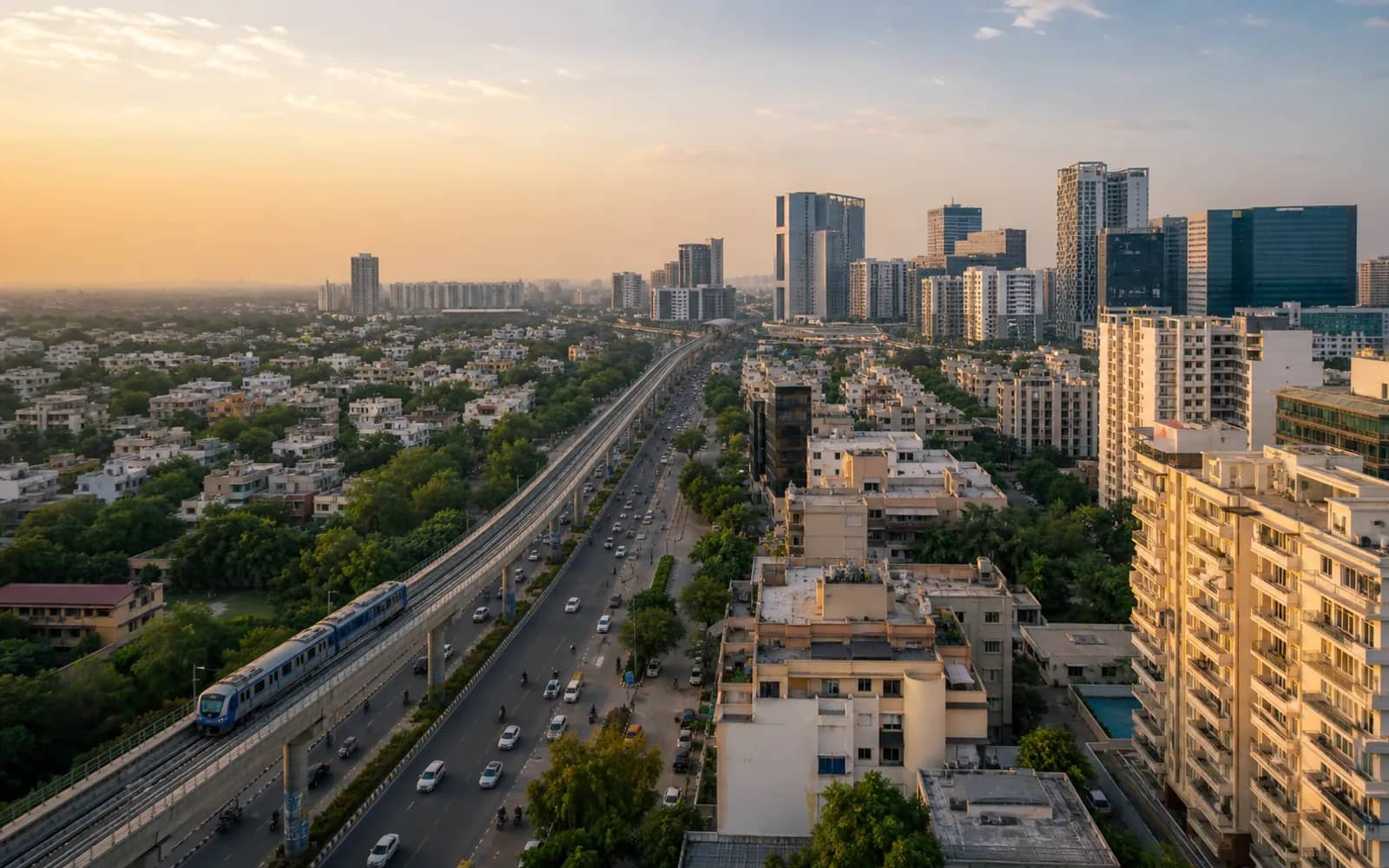
Where Retail Actually Gets Footfall in Noida Right Now: A Sector by Sector Reality Check
Sector 18, Sector 62 and Sector 75-76 top footfall consensus; here is what to verify before buying retail under 50 lakh.
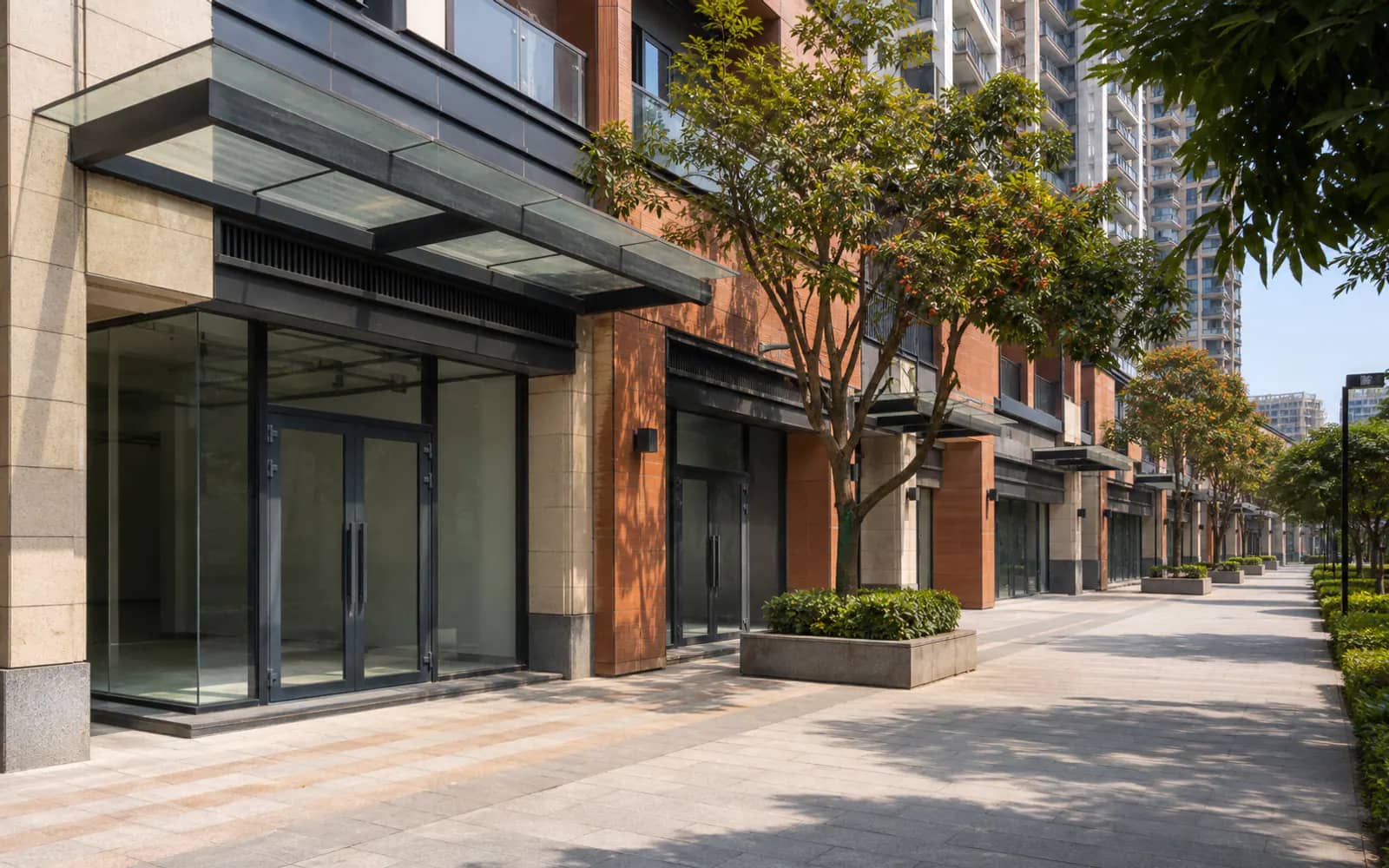
Answer: Market consensus repeatedly names Sector 18 (Atta Market) as Noida's busiest retail hub, followed by Sector 62, Sector 75-76, Sector 137 and Sector 150, with Sector 104/110 and Greater Noida West cited for residential-catchment retail. No government footfall count exists publicly, so treat these as broker and market-report consensus. For a shop under 50 lakh, smaller high-street or society-shop units in dense residential sectors are the realistic target; always verify unit size and total cost on UP RERA before committing.
Evidence-led guide: we do not quote live prices, approvals or returns as our own claims. Verify project-specific facts on the official sources linked below before acting.
Which Noida sectors get the most retail footfall today
Across multiple market reports and broker data compilations, one name comes up more consistently than any other: Sector 18, anchored by Atta Market and its established mall cluster. It is repeatedly described in market content as Noida's retail nucleus, and its combination of metro access, brand density and decades of shopper habit make it the default answer whenever the question is simply 'where does Noida shop.'
Behind Sector 18, the next tier is Sector 62 and Sector 63, where strong metro connectivity and nearby residential density drive consistent weekday footfall for food, services and convenience retail. Sector 75 and Sector 76 follow closely, built on a dense residential catchment around the Spectrum Metro micro-market, which generates repeat family traffic rather than one-off shopping trips.
Sector 137 and the Noida Expressway belt show up often for QSR and service-format retail, driven by a mix of housing and resident traffic. Sector 150 is cited less for mass footfall and more for an affluent, premium catchment suited to wellness and specialty retail. Sector 104, Sector 110 and Greater Noida West are described as growth markets rather than peak-footfall zones, useful for entry-level neighborhood demand as residential population there keeps expanding.
It is worth being direct about a limitation in the current source set: none of the market reports and blogs referenced here cite an authoritative government footfall count for any Noida sector. What follows is a synthesis of repeated market consensus across multiple independent write-ups, not a formal traffic audit. Treat it as a strong directional signal, not a certified number.
How do these footfall sectors compare on the criteria that matter
The table below groups the most commonly cited footfall sectors by the documented reason they attract traffic and the retail format each suits best, based on market consensus rather than a single official count.
| Area | Why it gets footfall | Best-fit retail use |
|---|---|---|
| Sector 18 / Atta Market | Established shopping hub with major malls, metro access, decades of shopper habit | Branded fashion, electronics, F&B |
| Sector 62 / 63 | Metro-linked zone with strong nearby residential catchment, consistent weekday demand | Food, services, convenience retail |
| Sector 75 / 76 | Dense residential catchment around Spectrum Metro | Grocery, daily needs, salons, family retail |
| Sector 137 / 142 | Expressway-side residential catchment with consistent traffic | QSR, services, tech-forward retail |
| Sector 104 / 110 | Emerging residential retail zones, growing local demand | Neighborhood retail, health, premium daily needs |
| Sector 150 | Premium residential base, less mass footfall | Premium retail, wellness, specialty |
| Greater Noida West | Large residential population, growing mall and high-street mix | Budget fashion, kids retail, daily needs |
Where should you open a retail shop for maximum footfall
If maximum footfall is the only goal and budget allows it, Sector 18 remains the clearest answer according to repeated market coverage, provided the acquisition or rental cost fits your plan. It is also usually the most expensive location in the city for retail, so it works best for brands or operators who can absorb premium rents and still turn a margin.
For most retail investors working with a defined budget, the more practical decision is to trade some peak footfall for a lower entry cost and a more stable, repeat-visit customer base. Sector 62 works well for service-based retail such as food and quick errands. Sector 75-76 suits daily-needs retail serving a settled residential population. Sector 137 fits QSR and convenience formats aimed at a resident catchment along the expressway belt.
Sector 72, which sits along this same central Noida and metro-linked commercial corridor, is also referenced in market content as a commercial and retail-oriented zone benefiting from nearby residential catchment. M3M India Noida operates a project in this belt; before treating any single project as a footfall guarantee, confirm current retail positioning, unit inventory and RERA registration directly, since market write-ups are not a substitute for the registered project record.
What can you realistically get for under 50 lakh
The highest-footfall core at Sector 18 is typically priced beyond a 50 lakh budget once you account for unit size, premium location charges (PLCs) and acquisition cost. For a genuinely affordable entry point, the practical shortlist to verify first is smaller high-street or society-shop units rather than mall frontage.
A sensible short list to check live pricing and inventory on includes Sector 75-76, Sector 104/110, Sector 137, Sector 140/140A and parts of Greater Noida West. Some secondary-market Sector 18 options may also fit a 50 lakh budget if the unit size is small enough, but this needs to be verified unit by unit rather than assumed from area reputation alone.
Published brochures and broker blogs frequently omit details that materially change the real cost of a shop: exact carpet or super area, parking charges, GST, PLCs, and maintenance deposit or corpus fund requirements. Before shortlisting any unit under 50 lakh, ask for a written, itemised cost sheet and cross-check it against the project's UP RERA filing.
What should you verify before buying a retail shop in any of these sectors
Retail footfall claims in brochures and blogs are marketing signals, not certified data. Before committing capital, run each shortlisted project through independent verification rather than relying on sector reputation alone.
Start with UP RERA (up-rera.in) to confirm the project is registered, check the promoter's disclosed details, sanctioned area, and stated possession timeline. Use IGRSUP (igrsup.gov.in) to check title and registration history and the current circle rate applicable to the sector, since circle rate directly affects your stamp duty and registration cost. For projects near metro corridors, confirm actual station distance and operational status with NMRC rather than assuming proximity from a map. Where the shop is in an Authority-allotted commercial scheme, a land-use and status check with the Noida Authority is also worth doing before signing anything.
If the unit is leasehold, understand what that means before buying: most Noida commercial and retail land carries a 99-year lease from the Noida Authority. Any resale or transfer typically requires a Transfer Memorandum (TM), which carries its own charges and processing time. Factor this into your total cost and timeline, and get the TM charge in writing from the seller or developer before finalising a deal.
Are Sector 72, 94, 97 and 98 relevant to a footfall-first retail decision
Sector 72 fits directly into this footfall conversation because it is repeatedly grouped with Noida's metro-linked commercial zones in market coverage, giving it a genuine connectivity and catchment case rather than a purely aspirational one.
Sector 94 through 98, commonly referred to as the Billionaires' Corridor or the Sector 94-98 luxury belt, sit in a different category. Coverage of projects like M3M's Cullinan Avenue in Sector 94 positions this corridor as premium expressway-adjacent mixed-use, meaning any retail component here is realistically aimed at an affluent, premium neighborhood catchment rather than a high-volume budget shop play. If your goal is maximum daily footfall on a tight budget, this corridor is not the natural fit; if your goal is a premium retail format serving a high-net-worth residential base, it is worth evaluating on its own separate criteria, verified independently through UP RERA and the project's official disclosures.
Is buying a retail shop for footfall actually worth it, or a loss risk
This is genuinely conditional, not a yes across the board. A shop in a high-footfall sector like Sector 18 can justify a premium price if your retail format, rent-to-revenue math and lease terms are sound, but the same location can be a loss if you overpay relative to realistic rental yield or underestimate parking, CAM and TM costs.
A shop in a lower-footfall but lower-cost sector such as Sector 104/110 or parts of Greater Noida West can outperform a premium-sector unit on net return if occupancy is stable and your operating costs are lower. The determining factors are not the sector name alone but documented RERA status, actual completion and handover record of the developer, real all-in cost versus brochure price, and a realistic occupancy and rental assumption you have stress-tested yourself, not one taken from a sales pitch.
One point on 'assured return' language you may see attached to some retail projects: this is strictly a due-diligence flag, not a benefit. Any assured-return or lease-guarantee scheme should be checked for a registered lease agreement and verified against RERA disclosures and current regulatory guidance, since such structures have drawn scrutiny in the wider Indian real estate market. Treat an assured-return pitch as a reason to investigate harder, not a reason to buy faster.
How expressway retail builds footfall without walk-past traffic
The high-footfall sectors named in this piece earn their traffic mostly from proximity: people who already live or work nearby, or who arrive on foot from a metro station. Retail whose main frontage is the Expressway rather than a residential grid or a station exit has far less of that walk-in base to draw on, so the test changes. It stops being how many people pass the door and becomes how many can reach it in a short drive, and whether what is inside justifies the trip.
The retail at M3M The Cullinan, Sector 94 is a useful worked example because the developer sets that case out in numbers you can hold it to. M3M's official project material puts the primary catchment at roughly 7 lakh people within about a 12 minute drive across Central Noida, the Noida Expressway corridor and South Delhi, and a secondary catchment of roughly 15 lakh within 25 to 45 minutes spanning South and East Delhi, Greater Noida and Ghaziabad. The same M3M material gives the physical basis for those drive times as signal-free access along the Noida-Greater Noida Expressway with high-visibility Expressway frontage, and a reach of under 20 minutes from sectors 15A and 16A, 90 to 96, 120 to 128, 140 to 150 and 43 to 53.
A drive-to catchment only converts if there is a reason to make the trip. According to M3M's project material, the scheme carries about 1.6 million sq ft of commercial space made up of an enclosed mall of roughly 1 million sq ft and a high-street of roughly 0.6 million sq ft, with a 5 screen multiplex, 20 to 25 fine-dine and casual-dining restaurants and entertainment formats it describes as new to the region, including indoor skydiving, mini golf and gaming zones. Every one of those is a developer figure describing an intended scheme, not a measured count of people through a door. Read catchment reach as a claim about who could come rather than who does, and check the retail area actually registered against the project's UP RERA filing before you treat it as demand.
How to verify this yourself
- Confirm project registration, promoter details, sanctioned area and possession timeline on UP RERA (up-rera.in) before shortlisting any retail unit
- Check current circle rate and title history for the sector on IGRSUP (igrsup.gov.in), since this affects stamp duty and registration cost
- Verify actual metro station distance and operational status with NMRC rather than relying on map estimates in brochures
- For Authority-allotted commercial schemes, confirm land-use and project status directly with the Noida Authority
- Get a written, itemised cost sheet covering PLCs, GST, parking charges and maintenance deposit before agreeing to any price
- If the unit is leasehold, confirm the Transfer Memorandum (TM) charge and process in writing before finalising a resale purchase
- Treat any assured-return or lease-guarantee offer as a due-diligence red flag requiring a verified, registered lease agreement, not a selling point
Sources and where to verify
- UP RERA official portal
- IGRSUP official portal for circle rates and registration
- Top 5 commercial investment zones in Noida for 2025, RealtyAssistant
- Noida's top retail store locations based on real buyer data, Xpert report
- Best sectors in Noida for commercial real estate investment, Housing in India
Continue your Noida research
Frequently Asked Questions
Which Noida sector has the highest retail footfall right now+
Sector 18, centred on Atta Market, is the most consistently cited high-footfall retail hub in Noida market reports, followed by Sector 62, Sector 75-76 and Sector 137; there is no single authoritative government footfall count, so this reflects repeated market consensus rather than official measured data.
Where should I open a retail shop in Noida to get maximum footfall on a smaller budget+
For maximum footfall on a limited budget, look at smaller high-street or society-shop units in Sector 75-76, Sector 104/110 or Sector 137 rather than mall frontage in Sector 18, which is typically the most expensive option, then verify exact unit size and total cost on UP RERA before deciding.
What can I realistically buy in Noida retail under 50 lakh+
Under 50 lakh, the realistic targets are smaller units in Sector 75-76, Sector 104/110, Sector 137, Sector 140/140A or parts of Greater Noida West, with occasional small secondary-market units in Sector 18 if the size fits; confirm live pricing and inventory directly with the project and check RERA filings before committing.
Is investing in high-footfall retail in Noida worth it or a potential loss+
It is conditional: a high-footfall sector like Sector 18 can be worth it if the rent-to-price math and lease terms are sound, but overpaying or ignoring costs like TM charges, CAM and parking can turn even a busy location into a loss, so the decision depends on verified numbers, not the sector's reputation alone.
Does Sector 72 get meaningful retail footfall compared to Sector 18 or Sector 62+
Sector 72 is grouped in market coverage among Noida's metro-linked commercial zones with genuine central connectivity and residential catchment, though Sector 18 and Sector 62 currently have a longer, more established footfall track record; verify any specific project's registration and positioning on UP RERA before comparing further.
Should I worry about retail oversupply in sectors like Sector 72 before buying+
Oversupply concerns are a fair due-diligence question in several Noida commercial micro-markets, so compare a project's disclosed catchment, connectivity and delivery record against named nearby developments through UP RERA filings rather than relying on footfall claims in marketing material.
Tags