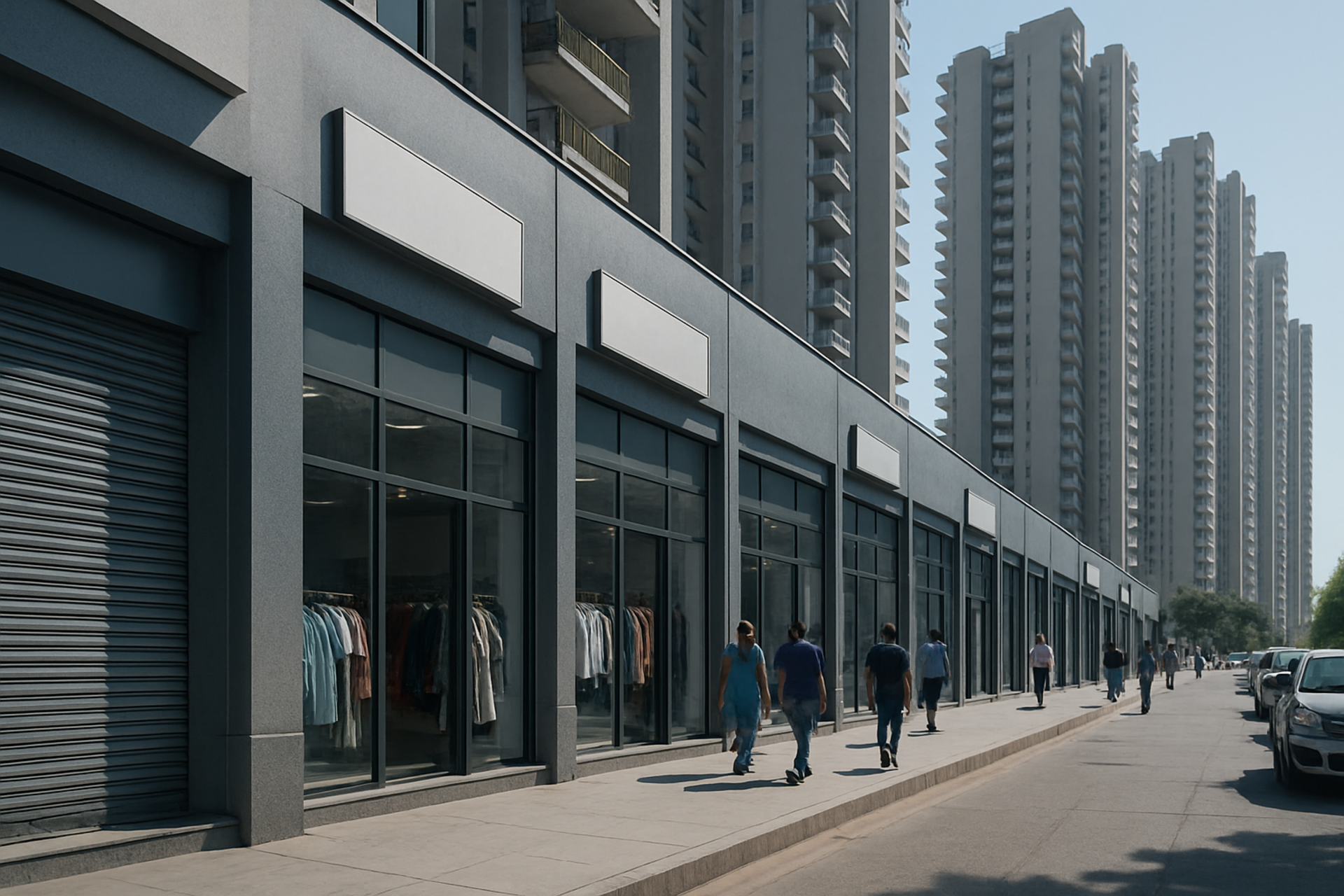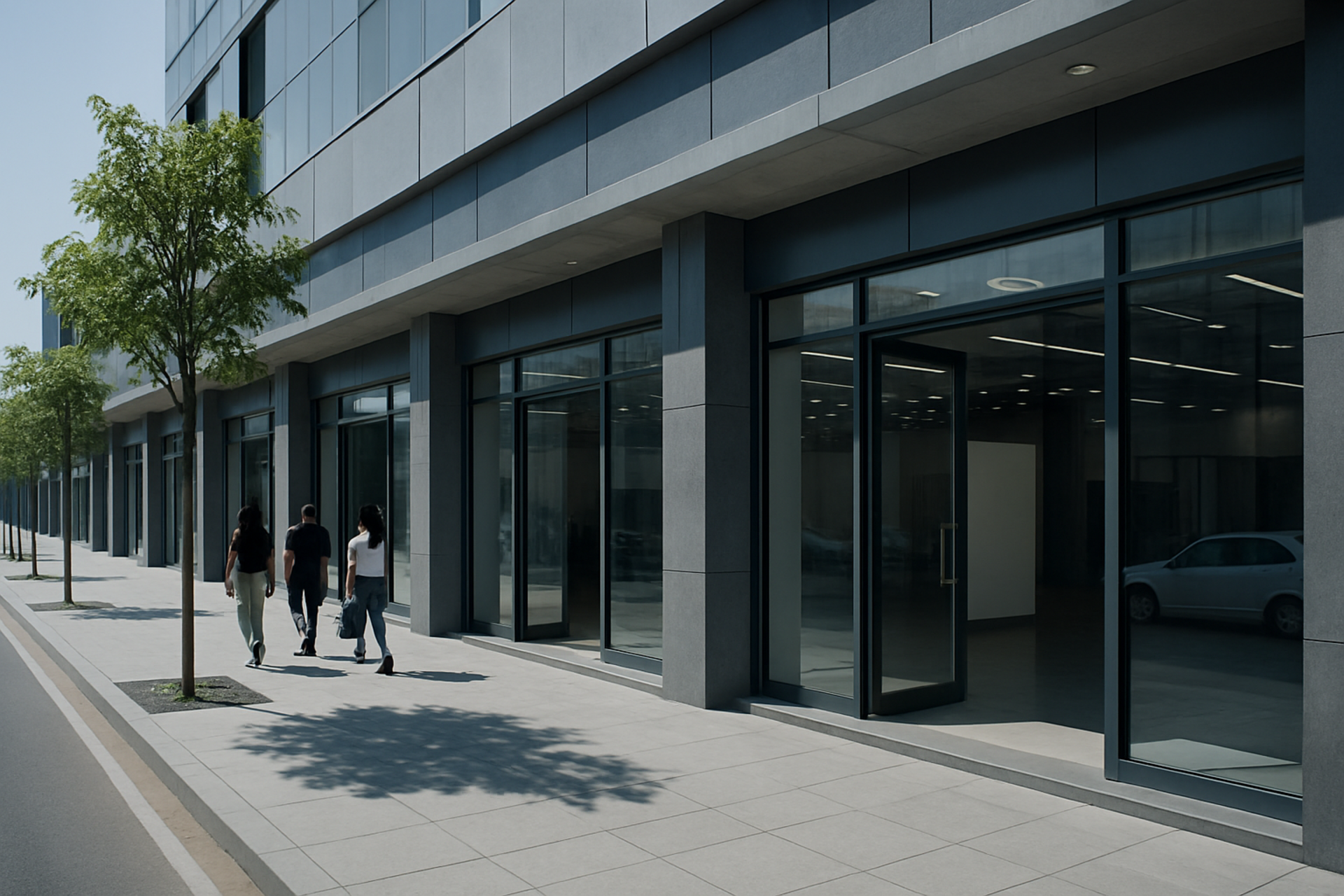
Mall or high street: which is cheaper to rent in Noida?
High street usually costs less to enter than a mall in Noida, but total occupancy cost depends on CAM, deposit and footfall. Here is how to compare.

Answer: For most brands, a high street unit is cheaper to enter in Noida than a mall, with simpler lease terms and lower upfront charges. A mall typically costs more overall once CAM, marketing fees and sometimes revenue share are added, but it offers managed footfall, parking and security. The real comparison is total monthly occupancy cost per usable square foot, not the headline rent, and that depends on the specific unit, floor and location.
Evidence-led guide: we do not quote live prices, approvals or returns as our own claims. Verify project-specific facts on the official sources linked below before acting.
Is a mall or a high street shop cheaper to rent in Noida?
A high street shop is usually the cheaper entry point. Lease structures tend to be simpler, with rent, a security deposit and basic maintenance as the main cost lines, whereas mall leases commonly stack base rent with common area maintenance (CAM), marketing or promotion charges, fit-out conditions and in some cases a revenue-share clause on top of minimum guaranteed rent.
Malls can still make financial sense for certain brands because they deliver controlled footfall, parking, security and climate control that a market street usually cannot guarantee. The right question is not which format is universally cheaper, but which format is cheaper for the specific brand, catchment and sales expectation in question.
How do mall and high street leasing costs actually compare?
Rent is only one line in the total cost of occupying retail space. CAM charges, GST, utilities, marketing fund contributions and any revenue-share arrangement all add to the monthly outgo, and these extras are typically higher and more fixed in a mall than on a high street.
| Factor | Mall | High street / market |
|---|---|---|
| Entry cost | Often higher: security deposit, CAM, marketing charges, fit-out rules, sometimes revenue share | Usually simpler lease; rent varies sharply by frontage, floor and market |
| Footfall | Concentrated and relatively predictable, dependent on tenant mix and occupancy | Can be stronger for destination markets and metro-linked streets; less controlled |
| Visibility | Good inside the mall; upper floors can be weak without anchors or escalator access | Direct signage, road visibility, independent access |
| Operating hours | Often fixed by mall management | More flexible, subject to local rules and landlord terms |
| Parking / security | Generally better managed | Highly variable |
| Best suited to | Fashion, lifestyle, branded food, entertainment, premium concepts | Convenience retail, services, clinics, value fashion, destination food |
| Main risk | Paying premium rent for a weak floor or under-occupied mall | Uneven pedestrian flow, parking problems, weaker common infrastructure |
What does retail rent actually cost across Noida sectors?
There is no single dependable citywide benchmark, because asking rents vary with floor, frontage, fit-out condition, lease term, maintenance charges and deposit structure. Asking rent ranges in established clusters such as Sector 18 vary widely depending on unit quality, position and lease terms, but any specific figure should be confirmed with current local brokers before being used to budget a lease.
A broad hierarchy still helps for planning. Sector 18 remains Noida's strongest established retail cluster with direct Blue Line metro access and commands premium asking rent relative to newer retail areas. Sectors 62 and 63 are metro-linked commercial areas suited to office-worker, electronics, food and service-led retail. Sectors 75 and 76 are central residential catchments with potential for neighbourhood and convenience retail. Aqua Line-linked Sectors 137 and 142 may offer lower asking rent than Sector 18, though footfall there needs to be measured locally rather than assumed from brochures. Local markets inside residential sectors are typically the lowest-cost entry for a first outlet, particularly for grocery, salons, clinics and daily-needs brands, though exact rent must be confirmed from current leases or multiple local quotations rather than listing-site averages.
What is the likely cost order from cheapest to most expensive?
Based on format and location rather than any single verified benchmark, the likely order runs from a small neighbourhood-market shop as the cheapest option, up through a secondary high street or newer-sector retail unit, then an established high street such as Sector 18, and finally a prime mall unit or mall-linked flagship frontage at the top.
This order is not fixed. It can reverse if a mall offers a small upper-floor unit, a rent-free fit-out period, or a heavily negotiated lease, while a prime high-street frontage in a high-demand market can cost more per square foot than a mediocre mall unit on an upper floor. Always compare total occupancy cost, worked out as base rent plus CAM plus GST plus marketing charges plus utilities plus any revenue share, and divide that by usable square footage rather than saleable square footage. Confirm whether the quoted area includes loading zones, corridors, common areas or balconies, since these inflate the area figure without adding sellable frontage.
Which format suits which kind of brand?
A high street or local market suits a first outlet, a brand that depends on repeat local customers, or a limited budget, because the lease is simpler and the entry cost lower. A mall suits a brand that needs premium positioning, managed parking, security, climate-controlled shopping and proximity to complementary national or international brands, where the higher occupancy cost is offset by a more curated customer base and longer dwell time.
For a high-street brand shop, Sector 18 is worth shortlisting only if the expected sales justify its premium rent; otherwise Sectors 62-63, 75-76, 137 or 142 are the sectors to compare on cost and catchment fit. On the mall side, Noida's newer mixed-use retail developments position themselves around a managed, destination-style experience rather than pure convenience footfall, and that positioning should be weighed against the higher all-in occupancy cost before signing.
What should a brand verify before signing either kind of lease?
Do not sign based only on a landlord's or broker's quoted footfall figure. Physically count pedestrians at lunch, evening and weekend hours, and separately count people who pass the exact frontage being offered rather than a general mall or market average.
Obtain at least three comparable lease quotations for the same catchment before negotiating. Verify CAM charges and their escalation clause, lock-in period, security deposit, fit-out period, signage rights, permitted operating hours, sanctioned power load, fire department approvals and the permitted use clause in the lease deed. For any project still under construction, confirm its UP RERA registration number on up-rera.in and match the retail unit against the sanctioned building plan before paying a token amount, and treat any mention of an 'assured return' on a leased retail unit as a due-diligence flag requiring independent legal verification rather than as a benefit, since regulators have repeatedly cautioned against such arrangements in under-construction retail schemes.
How to verify this yourself
- Confirm current asking and transacted rents for the specific unit and floor with at least three local brokers or landlords before budgeting
- Verify UP RERA registration number for any under-construction retail project on up-rera.in before signing or paying a token amount
- Check CAM charges, escalation clause, lock-in period, deposit and fit-out period in the actual lease draft, not the marketing brochure
- Physically verify footfall at the exact frontage across lunch, evening and weekend hours rather than relying on quoted mall or market averages
- Confirm whether quoted area is usable carpet area or includes loading, corridors and common areas before calculating effective rent per square foot
- Treat any assured-return offer on a leased retail unit as a red flag requiring independent legal verification, not a benefit
Sources and where to verify
Continue your Noida research
Frequently Asked Questions
Is it cheaper to open a shop in a Noida mall or on a high street?+
A high street unit is usually cheaper to enter because mall leases typically add CAM, marketing charges and sometimes revenue share on top of base rent, but total occupancy cost should always be compared unit by unit rather than assumed from format alone.
Which Noida sector has the cheapest high street retail rent?+
Local markets inside residential sectors and newer Aqua Line-linked areas such as Sectors 137 and 142 tend to offer lower entry rent than an established high street like Sector 18, though exact figures must be confirmed from current local lease quotations.
Is renting retail space in Noida worth it for a new brand in 2026?+
It can be worth it if the chosen format matches the brand's catchment and budget; convenience and value brands generally do better on a high street or in a local market, while premium or destination concepts can justify a mall's higher occupancy cost if the mall's stated catchment and tenant mix support that footfall. The loss scenario typically comes from signing a lease based on unverified footfall claims rather than from the format itself.
What hidden costs make a mall lease more expensive than it looks?+
CAM charges, marketing fund contributions, fit-out conditions, escalation clauses and in some cases a revenue-share arrangement on top of minimum guaranteed rent are the main extra costs that can push a mall's effective rent well above its headline quote.
Should a brand trust an 'assured return' offer on a leased retail unit in Noida?+
No, an assured-return offer on retail space should be treated strictly as a due-diligence flag rather than a selling point, and any such arrangement needs independent legal verification and confirmation of the unit's RERA-registered status before any payment is made.
Does Sector 18 oversupply or newer-sector retail competition affect rent in Noida?+
Established markets like Sector 18 command premium rent precisely because of their proven footfall and metro access, while newer sectors and mall projects compete mainly on catchment size and tenant mix, so a brand should compare documented footfall and occupancy levels for each specific property rather than relying on a sector's general reputation.
Tags