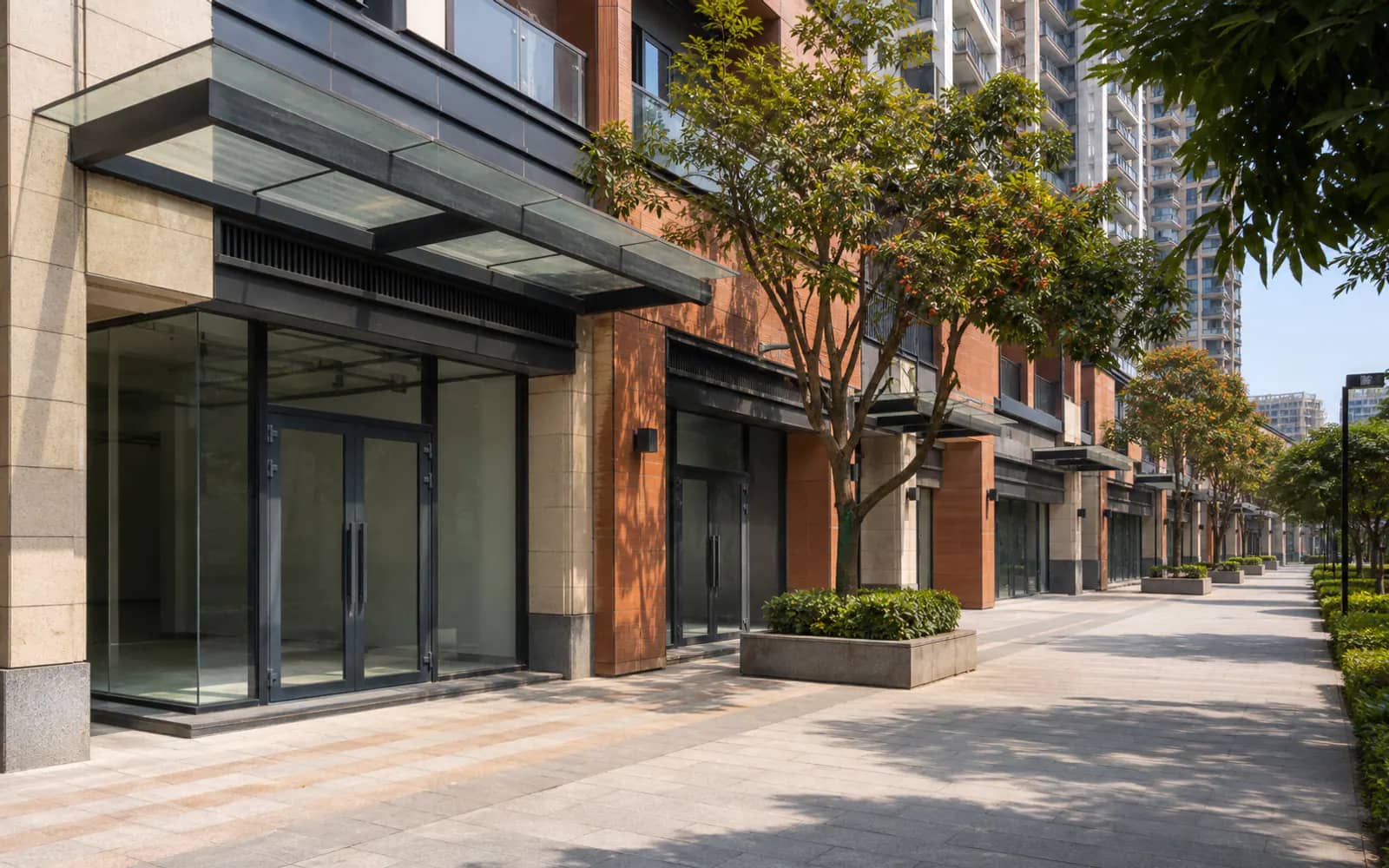
Retail Shop or Flat in Noida: Which One Actually Earns More in 2026?
Retail shops can outyield flats in Noida but carry vacancy risk; flats offer easier resale. Verify figures on UP RERA before deciding.

Answer: Neither asset class wins automatically. A well-located retail shop in a proven footfall corridor can generate a higher rent percentage than a flat, but it carries higher vacancy and execution risk. A flat is usually simpler, easier to resell, and has steadier end-user demand, though typically lower yield. The right answer depends on your budget, holding period and risk appetite, not the label shop or flat, so verify current pricing and RERA status before comparing further.
Evidence-led guide: we do not quote live prices, approvals or returns as our own claims. Verify project-specific facts on the official sources linked below before acting.
Why is this even a real dilemma for Noida investors?
Every few months, someone with a lump sum, often around 20 to 25 lakh rupees, asks whether a small retail shop or a resale flat will grow money faster in Noida. The honest answer is that both can work and both can fail, and the outcome depends far more on micro-location, entry price and your ability to hold through a vacancy period than on whether the asset is called a shop or a flat.
Retail shops in strong footfall corridors can technically offer a higher rent as a percentage of purchase price compared to residential units, because commercial rent per square foot is usually higher than residential rent per square foot in the same micro-market. But shops also sit vacant for longer stretches when a project is still filling up, and they depend heavily on catchment, visibility and the surrounding residential or working population actually using the space. Flats, on the other hand, generally have more predictable end-user and tenant demand and are easier to resell, but rental yield on a flat is usually lower than a genuinely well-let commercial unit.
What does a 25 lakh rupee budget actually get you in Noida right now?
This is the part investors often skip, and it changes the whole question. Based on current project pricing visible in developer and broker listings, most organised retail and premium residential launches along Noida's growth corridors are priced well above a 25 lakh rupee entry point.
For instance, M3M The Line in Sector 72 is a mixed-use project registered under UP RERA (verify current project registration number and details on up-rera.in) that combines retail shops with serviced studio units. Third-party listing sources show commercial units in this project at various price points starting from the mid-range upward; studio units and apartment options are listed at premium levels. On the residential side, large-format luxury projects referenced in market listings show apartment pricing in the multi-crore range. All pricing should be treated as listing-stage reference points only, not fixed offers, and verified directly with the project or on UP RERA (up-rera.in) before you act on them.
In plain terms, a 25 lakh rupee budget does not comfortably fit a decent retail shop or any of the branded residential or mixed-use launches referenced here. So the real starting question for that budget is not shop versus flat inside these specific projects, but whether a smaller resale flat, a lower-ticket unit in a different price band, or a longer savings runway toward one of these corridors makes more sense for your goals.
Retail shop or flat: which has better return potential?
Strip away the marketing language and compare the two asset types on the criteria that actually matter: yield potential, vacancy risk, liquidity, and dependence on project execution.
A retail shop's return depends almost entirely on footfall, and footfall depends on whether the surrounding residential population and workforce catchment are large enough and near enough to make the shop relevant. A shop in a project still under construction, or in a corridor where competing retail supply is large, can sit vacant for a long stretch even after possession, because tenants wait to see actual footfall before committing to rent. A flat's return depends more on general housing demand in the sector, connectivity, and the resale market's depth, which tends to be more forgiving because there are simply more buyers and tenants for housing than for commercial space in any given micro-market.
- Retail shop: potentially higher rent as a percentage of price if the location has proven footfall, but higher vacancy risk, more dependence on the developer completing common areas, food court anchors and parking, and slower to convert into cash if you need to exit
- Flat: typically lower rental yield than a well-let shop, but steadier tenant and buyer demand, faster resale in most sectors, and lower dependence on a single catchment succeeding
- Both: return is driven far more by entry price and micro-location than by the asset label alone, so a poorly located shop can underperform a well-located flat and vice versa
How does the Sector 72 retail oversupply concern factor in?
A fair and common objection from serious buyers is that Sector 72 and nearby stretches already have established retail destinations such as Spectrum Metro, Dasnac Arc and Central 50, and that adding more retail supply could mean tenants are harder to find or rents stay soft. This concern is legitimate and should not be waved away.
The realistic rebuttal is not that oversupply does not exist, but that not all retail supply competes for the same catchment or tenant profile. A shop's viability depends on its specific footfall funnel: the number of residential units and working population within walking distance, the visibility of that specific unit inside the project (ground floor versus upper floor, corner unit versus interior), and whether the project's anchor tenants and common area completion actually happen on schedule. Before buying any retail unit in this belt, ask the developer or channel partner for the actual leasing status of comparable units in the same project, not just the marketing brochure's projected footfall, and independently check the project's RERA-filed timeline and any disclosed delay history on UP RERA (up-rera.in).
Retail shop vs flat: a side-by-side comparison on stated criteria
The table below compares the two asset types only on criteria that can be independently verified rather than on invented advantages. Use it as a checklist, not a final verdict, since your own budget and risk tolerance will tilt the decision.
| Criterion | Retail shop | Residential flat |
|---|---|---|
| Typical rent as % of price | Can be higher in proven footfall corridors, verify with actual comparable leases, not brochure projections | Generally lower, but more consistently achievable across most sectors |
| Vacancy risk | Higher, especially in new or under-construction mixed-use projects until footfall stabilises | Lower, housing demand is broader and more consistent |
| Resale liquidity | Slower, fewer buyers for commercial units, especially upper-floor or interior units | Faster, larger buyer pool across almost every price band |
| Dependence on project execution | High, common areas, anchor tenants and parking completion directly affect footfall | Moderate, possession delay affects timeline but not the fundamental demand for housing |
| RERA verification needed | Project registration number, sanctioned commercial layout, promoter disclosures on UP RERA | Project registration number, sanctioned residential layout, possession date on UP RERA |
| Entry ticket size in premium corridors | Often starts higher per unit in organised mixed-use projects | Varies widely, from resale flats to ultra-luxury towers |
What should you actually verify before choosing either option?
Whichever way you lean, the verification steps are non-negotiable, and skipping them is where most Noida investment regret starts.
Start with UP RERA (up-rera.in) to confirm the project's registration number, the sanctioned layout for either the commercial or residential component, the disclosed possession timeline, and the promoter's track record on other registered projects. Cross-check the land use and allotment status with the NOIDA Authority where relevant, particularly for mixed-use projects where commercial and residential components sit on the same plot. For any resale purchase, confirm the registered sale deed and title chain on IGRSUP (igrsup.gov.in), and get the current circle rate for the sector from the same portal before finalising a price, since circle rate materially affects your stamp duty and registration cost. If metro connectivity is part of the pitch for a retail unit's footfall story, verify the actual station status and alignment with Noida Metro Rail Corporation (NMRC) rather than relying on a brochure map.
Is assured return on a retail shop something to trust?
No, and this deserves a direct answer. Some retail and mixed-use project marketing in Noida, including material referencing assured return style offers on commercial units, presents guaranteed income as a selling point. Treat any such claim strictly as a due-diligence item, not a benefit.
An assured return arrangement is typically a private contractual promise from the developer or an associated entity, not a government-backed guarantee, and it depends entirely on that entity's ability and willingness to pay over the committed period. Before considering any unit marketed this way, ask for the exact lease or assured-return agreement in writing, check whether it is registered, confirm the paying entity's identity and financial standing, and understand what happens if the assured-return period ends before the space is genuinely leased to a paying tenant. Community experience across Indian real estate markets has repeatedly shown that assured return schemes carry real counterparty risk, so this is a checklist item, never a reason to buy.
So which one should you choose: shop or flat?
If your priority is higher potential rental income and you can genuinely absorb a vacancy period without financial stress, a retail shop in a project with a proven or credibly emerging footfall catchment can outperform a flat over the holding period. This is where a project like M3M The Line in Sector 72, which combines retail with serviced studios and carries UP RERA registration, becomes relevant to examine on its actual leasing progress and disclosed timeline on UP RERA (up-rera.in), alongside comparable commercial options in the Sector 72 to 98 belt, rather than on marketing projections alone.
If your priority is lower risk, easier resale and more predictable tenant demand, a flat remains the simpler choice, particularly if your budget realistically matches resale inventory rather than ultra-luxury launches priced in crores. And if your budget is closer to 20 to 25 lakh rupees, the practical first step is not choosing between shop and flat inside a premium branded project at all, since premium branded projects in Sector 72, 94 and 97 are typically priced well above that figure; instead, widen your search to inventory that actually matches your budget and verify every number independently on UP RERA (up-rera.in) and IGRSUP (igrsup.gov.in) before committing.
How to verify this yourself
- Confirm the project's UP RERA registration number, sanctioned layout and disclosed possession timeline on UP RERA (up-rera.in) before comparing any shop or flat
- Check the current circle rate for the specific sector on IGRSUP (igrsup.gov.in) to understand stamp duty cost and get a reference point for fair pricing
- For resale purchases, verify the registered sale deed and title chain on IGRSUP before making any payment
- Ask for actual leasing status of comparable retail units in the same project, not brochure footfall projections, especially in Sector 72's competitive retail corridor
- If any assured return offer is presented, get the agreement in writing, confirm whether it is registered, and check the paying entity's financial standing independently
- Verify metro connectivity or infrastructure claims used to justify retail footfall directly with Noida Metro Rail Corporation (NMRC) rather than relying on project marketing
Sources and where to verify
- UP RERA official portal
- IGRSUP official portal for circle rates and registration
- M3M The Line project details, Square Yards listing
- M3M India Noida official website
Continue your Noida research
Frequently Asked Questions
Is a retail shop a better investment than a flat in Noida?+
It can be, but only under specific conditions: a proven or credible footfall catchment, a unit with genuine visibility inside the project, and your ability to absorb vacancy risk during the lease-up period; otherwise a flat's steadier demand and easier resale often make it the safer default.
I have 25 lakh rupees, should I buy a shop or a flat in Noida?+
Based on current market pricing for premium projects in Sector 72, 94 and 97, neither a quality retail shop nor these residential launches comfortably fit a 25 lakh rupee budget, so the first practical step is checking resale flat inventory or lower-ticket options and verifying every price on UP RERA (up-rera.in) and IGRSUP (igrsup.gov.in) before deciding between asset types.
Is buying a retail shop in Noida a loss or a profitable move?+
It is profitable only if the shop is in a genuinely strong footfall location, priced sensibly at entry, and you can hold through any vacancy period without needing immediate rental income; buying an interior or upper-floor unit in an oversupplied stretch purely on assured-return marketing is the scenario that most often turns into a loss.
What about the retail oversupply concern in Sector 72 with Spectrum Metro, Dasnac Arc and Central 50 already operating?+
The concern is valid and should be checked directly rather than dismissed; ask for the actual leasing status of comparable units in any new project you consider, and verify the disclosed timeline and promoter track record on UP RERA (up-rera.in) before assuming footfall will materialise as projected.
Should I trust assured return offers on Noida retail shops?+
Treat assured return strictly as a due-diligence flag, not a benefit; it is a private contractual promise, not a government guarantee, so get the agreement in writing, check if it is registered, and confirm the paying entity's financial standing before relying on it.
Which is easier to resell in Noida, a shop or a flat?+
A flat is generally easier and faster to resell because the buyer pool for residential units is larger and more consistent across almost every Noida sector, while commercial units, especially interior or upper-floor shops, typically take longer to find a buyer.
Tags