Picking a Shop That Actually Sells: 7 Location Factors for Noida Retail Investors
A practical framework for choosing a profitable Noida shop: footfall quality, catchment, frontage, RERA checks, and where premium retail belts fit in.
Answer: A profitable Noida shop location combines verified footfall (metro proximity, dense housing nearby), visible frontage on a main circulation path, adequate parking, and a legally clean RERA-registered project. First-time investors should prioritise verifiable demand drivers over brochure promises, check UP RERA registration and possession timelines directly, and match the shop format to the actual catchment rather than chasing speculative growth stories.
Evidence-led guide: we do not quote live prices, approvals or returns as our own claims. Verify project-specific facts on the official sources linked below before acting.
What actually makes a Noida shop location profitable?
Profitability in retail real estate is rarely about the address alone. It comes down to whether real people pass by the shop often enough, and whether they are the right kind of people for what is being sold. A shop can sit on a busy road and still underperform if the traffic is vehicular pass-through rather than pedestrian footfall that stops and shops.
The four factors that consistently separate a working retail location from a struggling one are footfall quality, catchment depth, frontage visibility, and access convenience. Each of these can be checked before you commit money, and none of them require taking a developer's word for it.
- Footfall quality over footfall volume: a shop near a metro station or dense housing generally sees more repeat visits than one on a wide road with no destination pull
- Catchment depth: nearby residents and students or hospital visitors who can return regularly matter more than one-time passersby
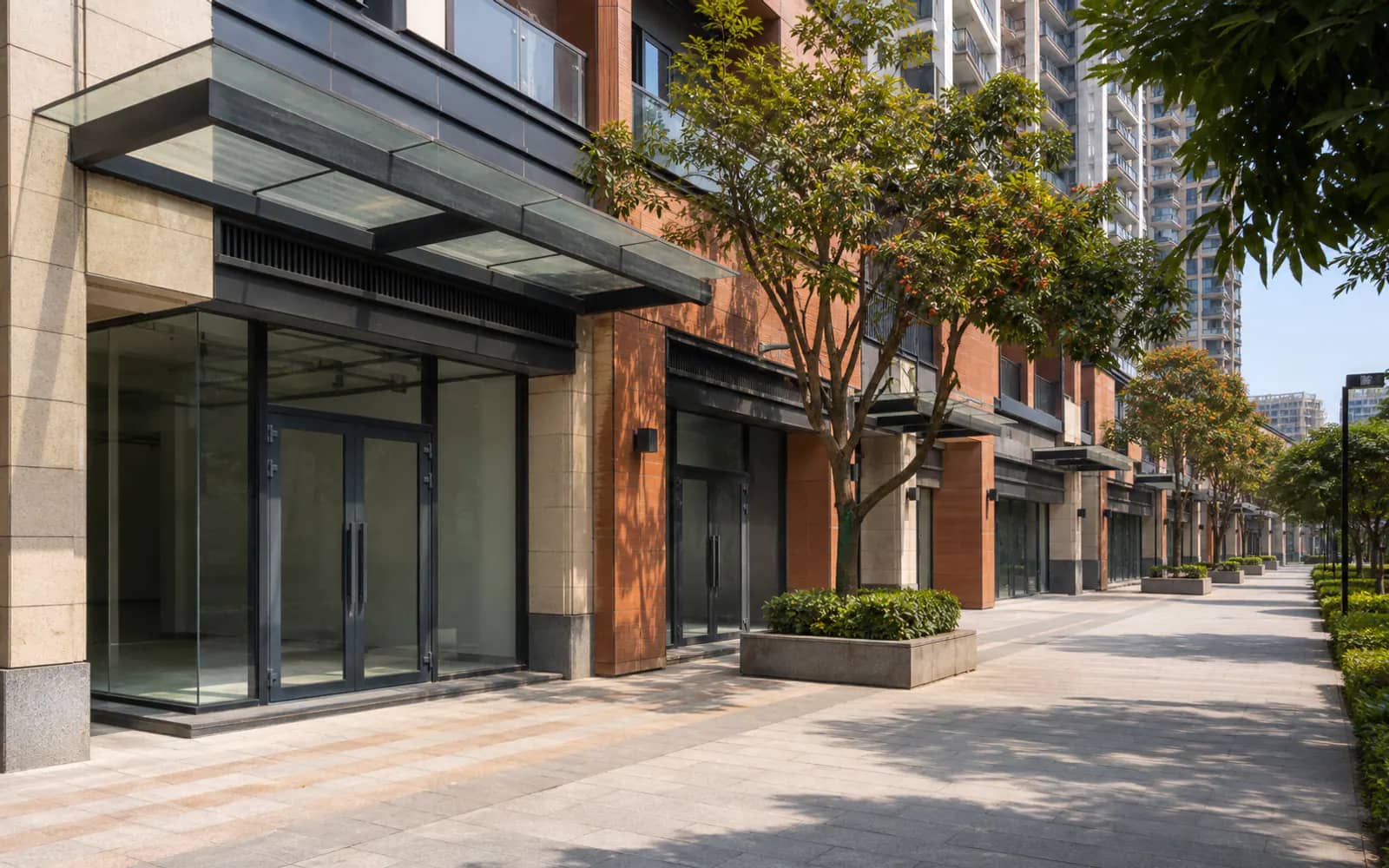
- Frontage and corner positioning: visible, easily entered shops on primary circulation paths outperform hidden internal units in mixed-use buildings
- Parking and last-mile access: even a well-located market underperforms if customers cannot park or enter without friction
How should a first-time investor pick a shop location in Noida?
If you are buying your first commercial unit, the safest discipline is to separate verifiable facts from sales narrative. Start by identifying whether the location has demand drivers that exist today, not ones promised for some future phase of development.
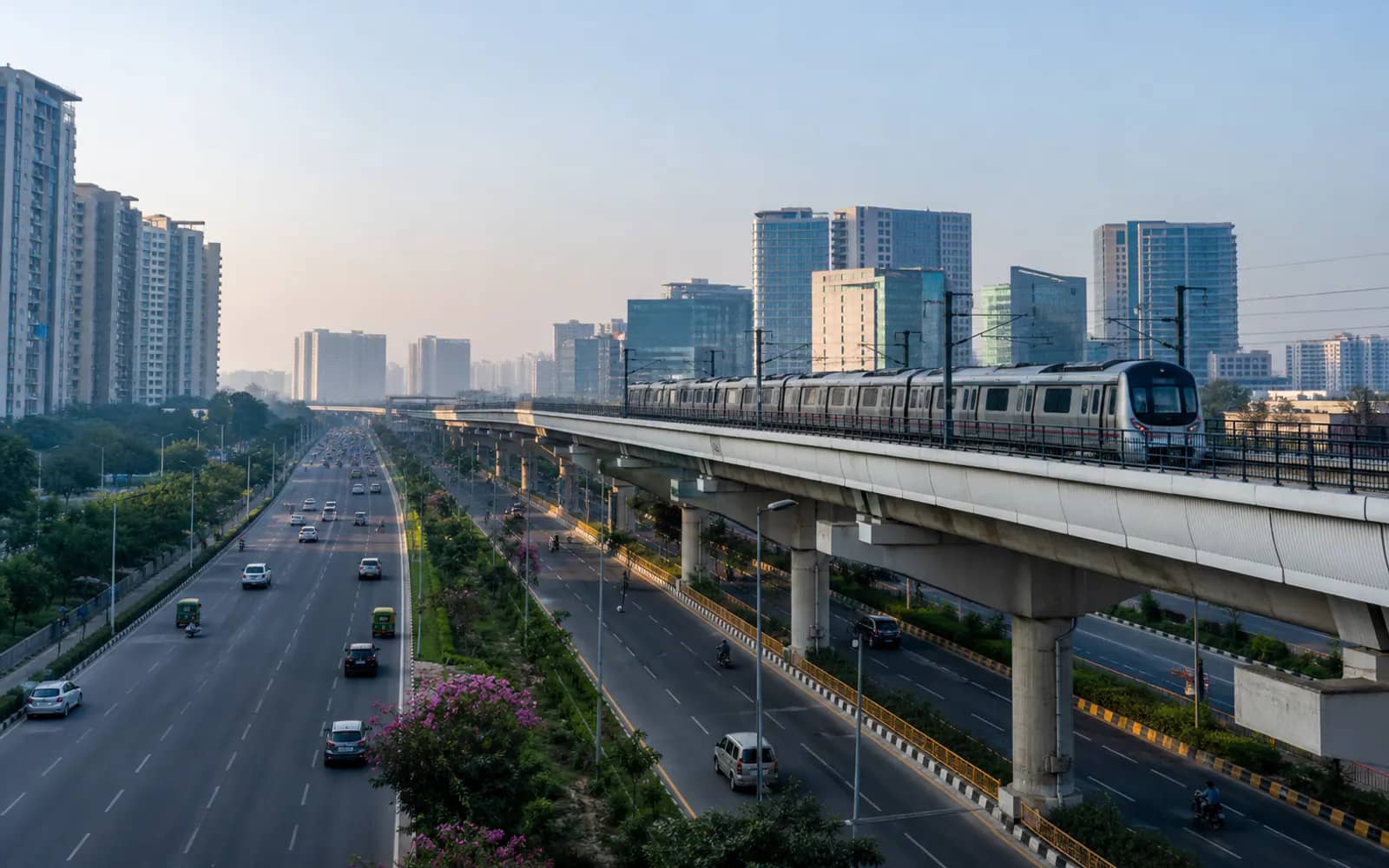
Check proximity to an operational metro line. Noida's metro system is the Aqua Line, run by NMRC, and station-area accessibility is a genuine practical driver for retail footfall, unlike a metro extension that is still under planning. Cross-check this against maps and NMRC's own route information rather than a brochure map.
Next, verify the project's legal status before thinking about returns at all. Confirm UP RERA registration, the registration date, and the promised possession timeline on up-rera.in directly. A project's RERA number and dates are searchable and should match what is presented to you in writing.
Be extra cautious with any project sold heavily on assured rental or guaranteed ROI language. These are sales marketing claims, not regulatory guarantees, and India's real estate regulatory framework does not permit such arrangements to be binding outside the formal buyer agreement. Such language in brochures or sales pitches is explicitly prohibited from carrying guarantee weight. Always request the exact clause in your formal buyer agreement rather than relying on what a sales pitch states.
- Confirm the metro station or transit node is operational, not proposed, using NMRC route information
- Search the project's RERA number directly on up-rera.in and match registration date and possession date to what you were told
- Read the formal buyer agreement for any assured-return or lease-guarantee clause; do not accept a brochure figure as binding
- Ask how the developer's past projects were delivered against their original RERA timelines
Which areas have shop locations with genuine footfall potential?
Within the sectors relevant to serious retail investors along the Noida Expressway belt, a few patterns are worth understanding before you compare specific projects.
The central Noida to Sector 72 corridor is one of the more practical retail catchments because it combines established housing, existing commercial activity, and metro-linked access. M3M's mixed-use project in this belt, M3M The Line in Sector 72, is marketed around proximity to Sector 51 Metro Station and surrounding residential sectors, positioning it for high-street retail and studio-format commercial units. This project carries the UP RERA registration UPRERAPRJ246070 (verify on up-rera.in), dated 28 November 2023, with possession targeted for July 2028 per its project UP RERA listing, both of which should be independently verified on up-rera.in before any decision.
Further along the Noida Expressway, Sector 94 to Sector 98, often referred to locally as the billionaires' corridor or the Sector 94-98 luxury belt, functions differently. This stretch is relevant for premium, high-income retail and destination shopping rather than mass footfall, provided the surrounding population and access genuinely support daily visits rather than only weekend or occasional traffic. M3M's presence here includes The Cullinan in Sector 94, a large mixed-use development where The Cullinan Avenue is the retail component of the portfolio, and premium residential projects such as Jacob & Co Residences in Sector 97, which signal a high-spend catchment rather than a guarantee of retail footfall on their own.
The distinction matters for underwriting: a shop aimed at daily-need retail, food, or convenience categories generally performs better where there is dense, repeatable local traffic, such as the Sector 51-72 belt. A shop aimed at premium or destination retail may make more sense in the Sector 94-98 corridor, but only after confirming the actual resident base, completed neighbouring developments, and access roads are in place, not just planned.
What should a budget-conscious retailer prioritise?
Not every investor is chasing a flagship high-street unit. For those working with a tighter budget, the goal is to find a shop where the entry price is manageable but the underlying demand drivers are still real.
A smaller shop with strong visibility on a primary walking or driving path is usually a better bet than a larger unit tucked into a weak corner of a mixed-use complex. Size matters less than whether the shop sits where people naturally move through the project.
Budget buyers should also weigh ongoing costs, not just the purchase price. Maintenance charges, common area fees, parking arrangements, and the realistic vacancy period between tenants all affect actual returns, and none of these show up in a headline price-per-square-foot figure.
- Prioritise a lower entry cost only if the location still has a genuine footfall driver such as a metro stop or dense residential cluster nearby
- Choose primary circulation path visibility over larger floor area in a weak position
- Factor in maintenance, parking and service charges before comparing headline prices across projects
- Treat a lower price with unclear RERA or approval status as a red flag, not a bargain
How does Sector 72 retail supply compare and is oversupply a real risk?
Sector 72 already has established retail developments including Spectrum Metro, Dasnac Arc, and Central 50, and prospective buyers reasonably ask whether the sector has enough demand to support additional retail supply.
The honest answer is that oversupply risk is real in any sector where retail construction outpaces population and footfall growth, and it should be assessed project by project rather than dismissed. The relevant checks are whether a new project sits on a genuinely different catchment or access point than existing malls, whether it targets a different retail mix, and whether its own RERA-disclosed delivery timeline and registered status are in order.
For a project like M3M The Line, the differentiator to verify is its stated proximity to Sector 51 Metro Station and its high-street, mixed-use format combining retail with studio apartments, which is a different configuration from a pure indoor mall. Buyers should independently confirm actual walking distance to the metro station, current occupancy or leasing status of comparable retail in the sector, and the project's UP RERA disclosures before assuming any project, including M3M's, is insulated from local supply competition.
How does a shop purchase compare across leasehold status, RERA checks and Transfer Memorandum costs?
Nearly all Noida commercial land, including retail shops in mixed-use developments, is allotted on a 99-year leasehold basis by the Noida Authority, not freehold. This is a structural fact of the market, not specific to any one project, and it affects resale, financing, and long-term planning.
When a shop changes hands, a Transfer Memorandum (TM) needs to be executed and registered with the Noida Authority, and this carries its own charges that are separate from stamp duty and registration costs. Buyers frequently underestimate this cost when budgeting for a resale purchase, so it should be confirmed with the Authority or a property lawyer before finalising a deal.
Before paying any booking amount, verify the project's RERA registration number, registration date, and promised possession date directly on up-rera.in, and cross-check that these match the documents shown to you. Do the same for the seller's title if buying a resale unit, checking the chain of ownership and any pending dues with the Noida Authority.
Is buying a shop in Noida worth it or a likely loss for a first-time investor?
It depends entirely on which location and project you choose, and whether you complete the verification steps above before committing capital. A shop in a project with confirmed metro proximity, dense surrounding catchment, transparent UP RERA disclosures, and a realistic possession timeline is a fundamentally different bet than a shop bought purely on projected returns in an unproven micro-market.
A conditional way to think about it: if the location has verifiable footfall drivers today, the developer has a track record you can check, and the legal paperwork matches what up-rera.in shows, the investment case is reasonable and worth underwriting carefully. If any of those three are missing or unverifiable, the risk of an illiquid, underperforming shop rises sharply, regardless of how attractive the brochure numbers look.
How to verify this yourself
- Verify the project's RERA registration number, registration date and possession date directly on up-rera.in
- Confirm metro station proximity and operational status using NMRC's official Aqua Line route information
- Check land tenure status (99-year leasehold) and any pending dues with the Noida Authority before purchase
- Ask for Transfer Memorandum charge details in writing if buying a resale shop
- Request the developer's track record of past project deliveries against original RERA timelines
- Read the formal buyer agreement for any assured-return clause rather than relying on brochure claims
Sources and where to verify
- UP RERA official portal
- M3M The Line Sector 72 project listing (Square Yards)
- M3M India Noida official website
Continue your Noida research
Frequently Asked Questions
What makes a good shop location in Noida for retail business?+
A good shop location combines verified footfall quality, a dense nearby catchment of residents and students or hospital visitors, visible frontage on a primary path, and easy parking or metro access, all of which should be checked on the ground rather than assumed from a brochure.
How do I pick a profitable shop location in Noida as a first-time investor?+
Start by confirming operational metro proximity and real surrounding demand, then verify the project's UP RERA registration number, dates and possession timeline on up-rera.in before considering any projected returns.
Which areas in Noida have the best shop locations for footfall and sales?+
The central Noida to Sector 72 belt offers metro-linked, established catchments suited to daily-need retail, while the Sector 94-98 corridor along the Noida Expressway suits premium or destination retail if surrounding population and access are genuinely in place.
What should a budget-conscious retailer look for in a Noida shop location?+
Look for a smaller, visible shop on a primary circulation path rather than a larger unit in a weak position, and confirm maintenance, parking and RERA approval status before comparing on price alone.
Is Sector 72 oversupplied with retail given Spectrum Metro, Dasnac Arc and Central 50 already operating?+
Oversupply risk is real and should be assessed per project rather than assumed; check each new project's actual catchment, access point, retail mix and RERA-disclosed delivery record rather than treating existing retail stock as automatically saturating demand.
Is buying a retail shop in Noida a safe investment or a likely loss?+
It is conditional: a shop with verified footfall drivers, a developer with a checkable delivery record, and matching UP RERA documentation is a reasonably underwritten bet, while a shop bought on projected returns alone in an unproven location carries meaningfully higher risk.
Tags